 GreenPlanet News

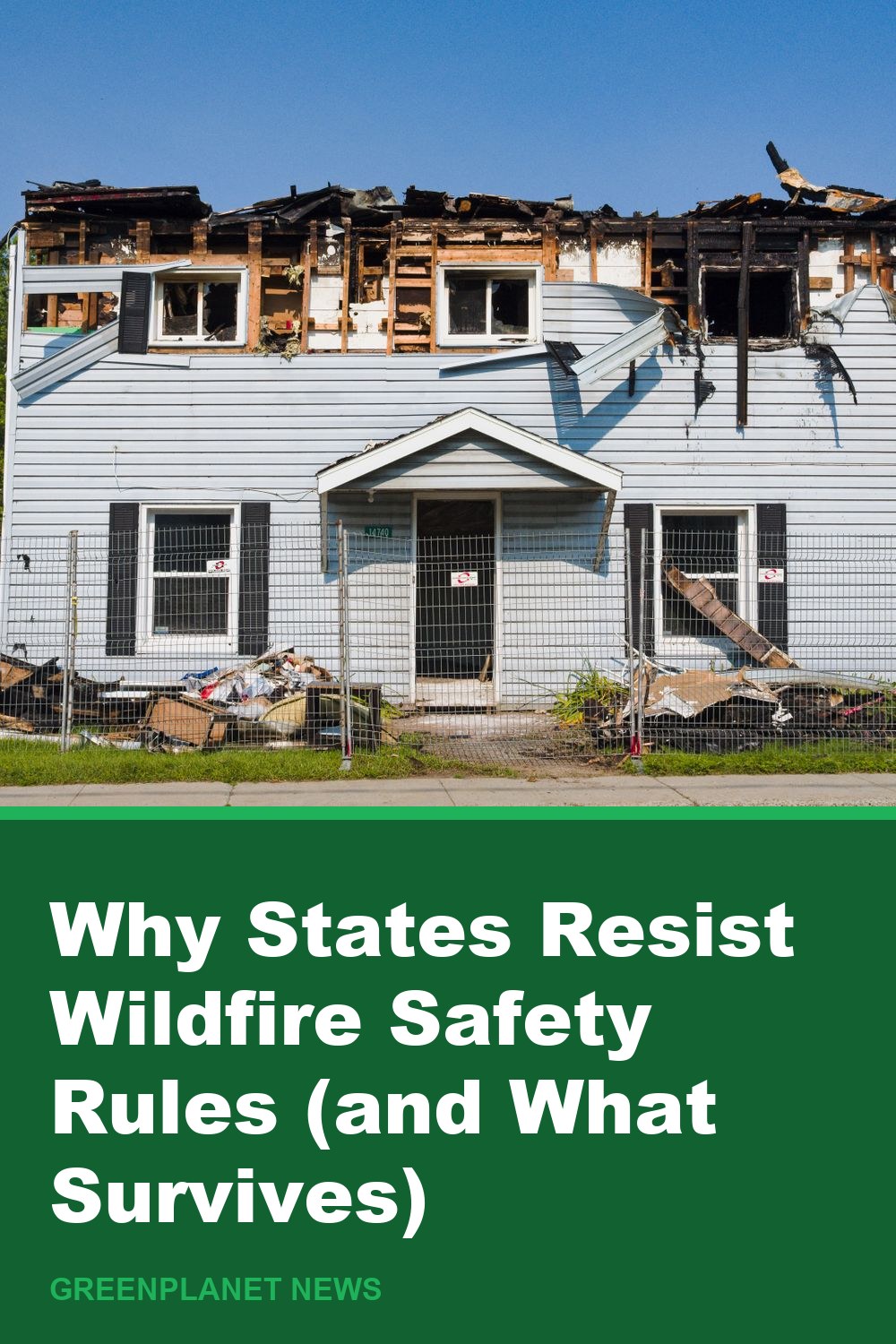

- Wildfire rules get rolled back because they add costs or change how gardens and neighborhoods look, and they depend on state and local votes.
- In August 2026 the Old Trails Fire and two others destroyed over 800 homes and buildings in Spokane, soon after Washington reversed some protections.
- Fire-resistant siding and cleared vegetation don't need a new law: Spokane's Dave Kokot used both and believes they helped his home survive.
States resist wildfire safety rules mainly because the rules land on homeowners as two things they dislike: extra costs and a change in how their property looks. Wildfire preparedness is also left largely to state and local authorities, so each rule has to win its own vote and can be reversed after public pushback. That is what happened in Washington state, where some protections were rescinded and then, in August 2026, the Old Trails Fire and two other wildfires destroyed over 800 homes and buildings in Spokane. If you live in fire country, the practical point is that the rules protecting you may be thinner than you assume, and the steps that matter most are ones you can take yourself.
Who decides wildfire rules, and why does that make them fragile?
Flood risk is usually handled with clear maps and policies from federal agencies. Wildfire is different. Most of the responsibility sits with states and local governments, so protections vary a great deal from one place to the next.
Ryan Maye Handy of Headwaters Economics describes the result: communities choose for themselves whether to adopt building codes that address wildfire. That produces a fragmented, uneven set of protections. A rule that passes in one county may not exist in the next, and a rule that does pass has to survive every later round of debate.
What do the rules ask of homeowners, and why do people object?
Washington's work over several years has centred on two kinds of requirement:
- fire-resistant building materials on homes in high-risk areas;
- control of vegetation around properties.
The objections came mostly from the second. Some homeowners called limits on plants and garden landscaping intrusive or costly. More broadly, people can be reluctant to change a garden or pay for upgrades when the benefit is not obvious or immediate, and some simply prefer less regulation on their own land.
Those reactions are understandable. A rule that says what you can plant, or what your siding must be made of, feels personal in a way a distant forest policy does not. That is why the same measures that could cut wildfire damage so sharply often meet resistance: they add costs and change the look of neighborhoods.
What happened in Washington?
- Over several years: the state worked on wildfire safety regulations covering building materials and vegetation.
- After public opposition: lawmakers rescinded a number of those regulations, even as drought and fire conditions worsened.
- August 2026: the Old Trails Fire and two other wildfires devastated Spokane, destroying over 800 homes and buildings.
One Spokane resident shows what the rules were aiming at. Dave Kokot, a fire protection engineer, fitted his own home with fire-resistant siding and cleared vegetation around it. He believes those steps helped his home survive the fires.
Why do building and vegetation rules matter so much?
Embers can travel and ignite homes even miles away from the flames. That means a house does not have to stand in the path of the fire front to be at risk. Fire-resistant construction materials and cleared flammable plants around a home improve its chances of surviving.
Fire-resistant siding and roofing cut the chance that burning embers will ignite the house. Combined with cleared vegetation and defensible space, they significantly improve the odds when a wildfire is nearby. The costs of rules are visible immediately, while the benefit shows up only in a fire. That mismatch explains much of the political trouble.
What can go wrong when protections are weak or reversed?
First, unevenness. If your neighbor's community has strict standards and yours does not, your home may be more exposed to life-threatening conditions than you think.
Second, rules are not the only layer that can slip. Prescribed burns, which reduce excess brush and dead vegetation, also saw setbacks: controlled burning dropped by nearly half during the Trump administration. That removed a key tool forest managers use to keep wildfire risk in check. If both home-level rules and landscape-level tools weaken together, more of the burden falls on individual households.
Third, maps. Wildfire hazard maps help define where tougher building standards should apply, so out-of-date or contested maps can leave a high-risk street outside the stricter zone.
How can you protect your home whatever your state decides?
You do not need a law to harden your own property. Here is a sensible order, starting with the cheapest and most visible jobs:
- Find your local wildfire risk map. Understanding where your property sits guides every other decision, including evacuation planning.
- Clear flammable vegetation near the house. Maintaining a defensible space lowers the risk of ember ignition.
- Trim tree limbs away from the home. A telescoping pruning saw and sturdy loppers handle most of this for a household.
- Plan upgrades to non-wood siding and roofing. Get quotes before you commit, and list jobs by what exposes your home most. Our Honest Toolkit renovating checklist can help you organise the work and the contractors.
- Write down your evacuation plan using the risk map from step one.
- Show up locally. Take part in council and county discussions on fire safety rules, because rules that face resistance are often the ones that matter for long-term resilience.
The sources give no cost figures for these upgrades, so ask for written quotes and compare them rather than relying on a rule of thumb. Readers outside the US can ask their local authority what applies to their area.
How can you keep a garden you like and still cut fire risk?
The biggest complaint about vegetation rules is the loss of a garden people have built. The fire-safety point is narrower than many assume: it is about flammable plants and tree limbs close to the house. Our post on Chicago's rule for native plants on parkways shows how appearance rules can shift when residents push for them, and our guide to a wildlife-friendly garden covers planting ideas. Check any plan against your local fire guidance before you plant near the house.
What should you watch next?
Washington and other Western states will probably revisit wildfire safety codes in the coming years, weighing public concerns against rising urgency. Updates to hazard maps are expected to continue. Legislators' decisions on whether to reinstate or rewrite requirements for fire-resistant construction and vegetation management will shape how resilient vulnerable communities are. For wider background on how fire reshapes land, see our post on how wildfires are transforming ecosystems.
FAQ
What are prescribed burns and why do they matter for rules?
They are intentionally set, low-intensity fires that reduce excess brush and dead vegetation. They lower the fuel available and can create natural fire breaks, making uncontrolled fires less likely and less severe. When they decline, home-level protections count for more.
Do I need to wait for a state rule before upgrading my home?
No. Fire-resistant siding and roofing, cleared vegetation and trimmed limbs are all steps a homeowner can take now. Dave Kokot in Spokane did exactly that, and he believes it helped his home survive.
As an Amazon Associate I earn from qualifying purchases: if you buy through these links I may earn a small commission, at no extra cost to you. Each link opens a search on the Amazon store for your country.
Sources
Photo: Eric Prouzet / Pexels

I'm an Italian creator who builds apps, games and websites. I run GreenPlanet News with the help of AI tools: every article starts from the sources linked above, and I check what goes out. I'm not a doctor, a lawyer or a financial adviser. Spotted a mistake or have an idea? Write to me.
Instagram @spartaco_94_My websiteWrite to meAbout this blog










 Green Investing 101: A Beginner's Guide to Sustainable Investments





