 GreenPlanet News

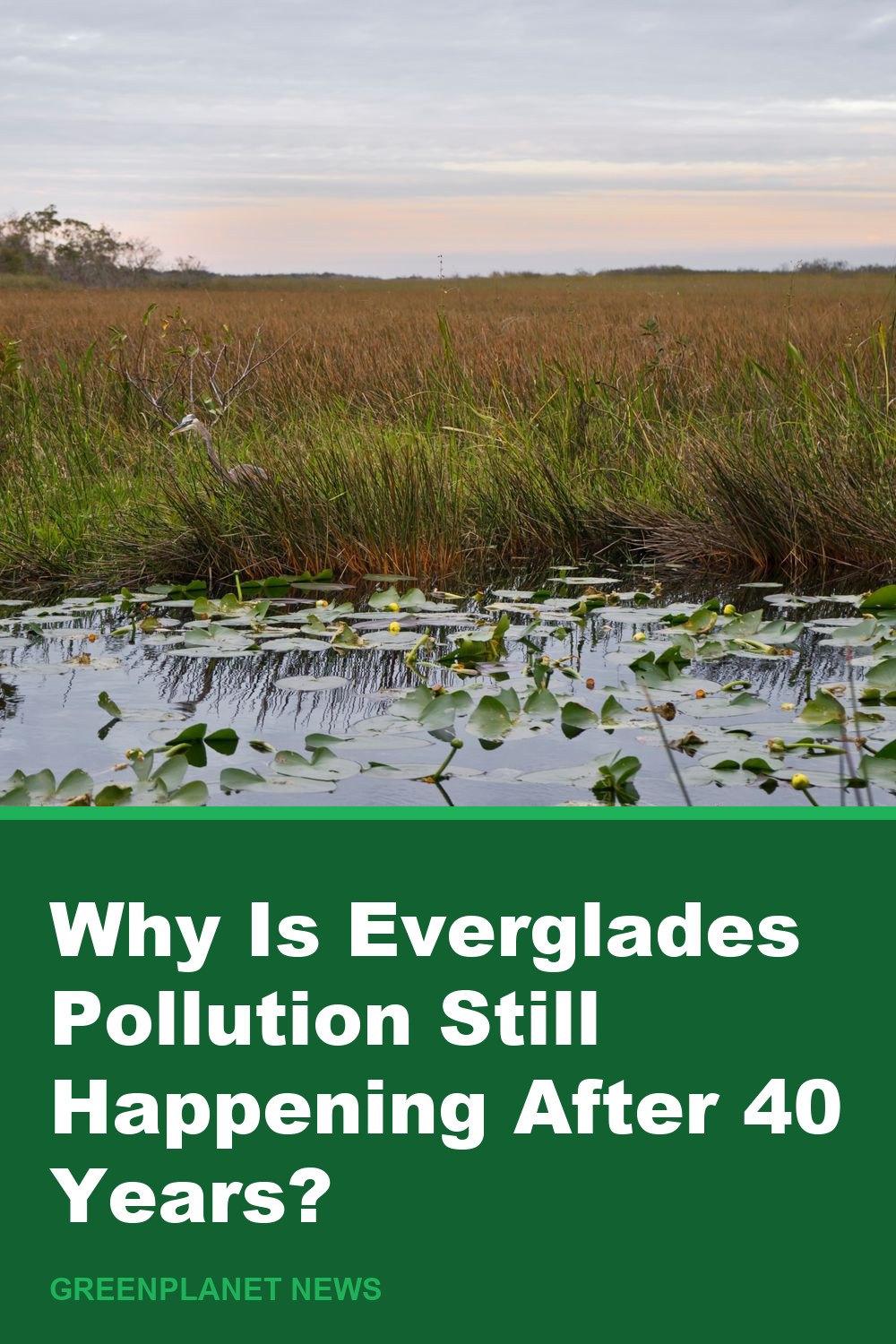

- The Everglades is not on track to meet its water quality standards, even after four decades of restoration work.
- Excess phosphorus feeds algal blooms that drain oxygen from the water and harm aquatic life and the food chains built on it.
- At home, using less fertilizer and catching rain runoff are the two cheapest ways to keep nutrients out of local waterways.
Everglades pollution is still happening because the main pollutant, phosphorus, keeps arriving faster than restoration can remove it, and the sources feeding it (farm runoff, urban development and a changing climate) have not gone away. Friends of the Everglades published a report on water quality and the performance of Stormwater Treatment Areas (STAs) as of 2026. It found that the region is not on track to meet its water quality standards, despite forty years of effort. Households far from Florida can still use the explanation, because the same nutrient problem starts with ordinary lawns and drains.
The claim: forty years of restoration should have fixed it
People often assume that if a famous wetland has had four decades of money and attention, the water must be clean by now. The reasoning is fair. If the work were as simple as removing a pollutant, forty years would be plenty.
The Friends of the Everglades report points the other way. The nutrient load, particularly phosphorus, is still harming the system, and recent conservation efforts have not yet delivered the water quality improvements the restoration plan aimed for. So the claim feels right but does not match the measurements.
What is true: progress is real, but the goals are unmet
Three things hold up.
- Some restoration has advanced. According to the report, there have been advances in specific areas. The effort has not been standing still.
- The overall objectives are still out of reach. The Everglades is not on track to meet the established water quality standards, which holds back the goals of the restoration plan.
- The stakes are high. The Everglades, known as the "River of Grass", works as a natural filter that helps keep water supplies clean. It supports endangered species such as the manatee and the Florida panther. It also affects tourism, fisheries and local economies, and it helps the region cope with flooding and rising sea levels.
When the water quality targets are missed, every one of those jobs is put at risk.
What phosphorus does to the ecosystem
Phosphorus is a nutrient, and nutrients are not harmful in small amounts. The trouble is excess. According to the Friends of the Everglades report, heavy phosphorus loads contribute to algal blooms. Those blooms can devastate aquatic life and upset the balance of a delicate ecosystem.
The chain of damage runs like this:
- Extra phosphorus enters the water.
- Algae bloom.
- Oxygen in the water drops, which harms aquatic life.
- Food chains that many species depend on are disrupted.
That is why a wetland that looks green and alive can still be in trouble. A pollutant you cannot see from the road can reshape what lives in the water.
What is not true: it is not one polluter, and it is not one fix
The other common belief is that a single culprit explains it. The report instead points to several pressures acting together:
- Agricultural runoff carrying nutrients into the water.
- Urban development, which adds to the load.
- Climate change, which makes the situation worse and complicates restoration.
It is also not true that the system has failed. The treatment areas and restoration projects are not useless. The issue is that the results have not yet matched the targets. Cleaning a vast, intricate ecosystem is complex, and the report says the situation calls for a reassessment of current strategies.
Why the problem is so hard to fix
Putting the report's findings together, the difficulty comes down to a few points:
- Scale. The area is vast, and the water that enters it comes from many places.
- Several sources at once. Cutting one source does little if the others keep adding nutrients.
- A moving target. Climate change makes conditions worse while the work is under way, so a design that made sense years ago may not be enough now.
- Slow recovery. Environmental recovery takes time and persistent action, so a missed target can reflect a long lag as well as a failure.
This is why the report's call for a rethink matters more than any single project. Fixing the problem means reducing what goes in as well as treating what is already there.
What it changes at home: keep nutrients out of the water
You cannot fix the Everglades from your driveway, but nutrient runoff is a problem everywhere, and the habits that reduce it also save money. Here is a short routine, starting with the cheapest step.
- Use less fertilizer. Reducing fertilizer use is one of the actions named for individuals who want to protect the Everglades and similar waters. Less spent on fertilizer means less nutrient leaving your yard in the next heavy rain.
- Test before you feed. A basic soil test tells you what the lawn needs, so you do not apply nutrients it does not use.
- Catch rain where you can. A barrel under a downspout keeps water on your own plot instead of sending it down the drain. Our guide to rain barrels and cisterns, including local rules shows how to size one.
- Plant for the soil, not the sprayer. A lawn that needs less feeding is cheaper to keep. See how to turn a lawn into a wildlife-friendly garden.
- Look at nearby water-cleaning projects. Wetlands built to improve water quality exist elsewhere too, such as the floating wetland near O'Hare, which aims to improve water quality in Chicago.
- Join a local effort. Clean-up events and local conservation groups are the other practical routes the report's takeaways suggest, along with supporting stronger policies that protect vital ecosystems.
If you live in Florida, the Everglades is your regional water story. If you live in the UK or elsewhere in the US, it is a clear example of what happens when nutrients pile up faster than they can be removed. In both cases, the cheapest fix is the nutrient you never applied.
What to remember about the Everglades
The Everglades is still polluted because phosphorus loads from several sources continue to feed algal blooms, and the standards are still unmet. Better treatment helps, but it has not yet caught up with the pressure on the system. Staying informed, using less fertilizer and backing local conservation work are modest steps that point in the right direction.
As an Amazon Associate I earn from qualifying purchases: if you buy through these links I may earn a small commission, at no extra cost to you. Each link opens a search on the Amazon store for your country.
Photo: Robert Schrader / Pexels

I'm an Italian creator who builds apps, games and websites. I run GreenPlanet News with the help of AI tools: every article starts from the sources linked above, and I check what goes out. I'm not a doctor, a lawyer or a financial adviser. Spotted a mistake or have an idea? Write to me.
Instagram @spartaco_94_My websiteWrite to meAbout this blog










 Green Investing 101: A Beginner's Guide to Sustainable Investments





