 GreenPlanet News

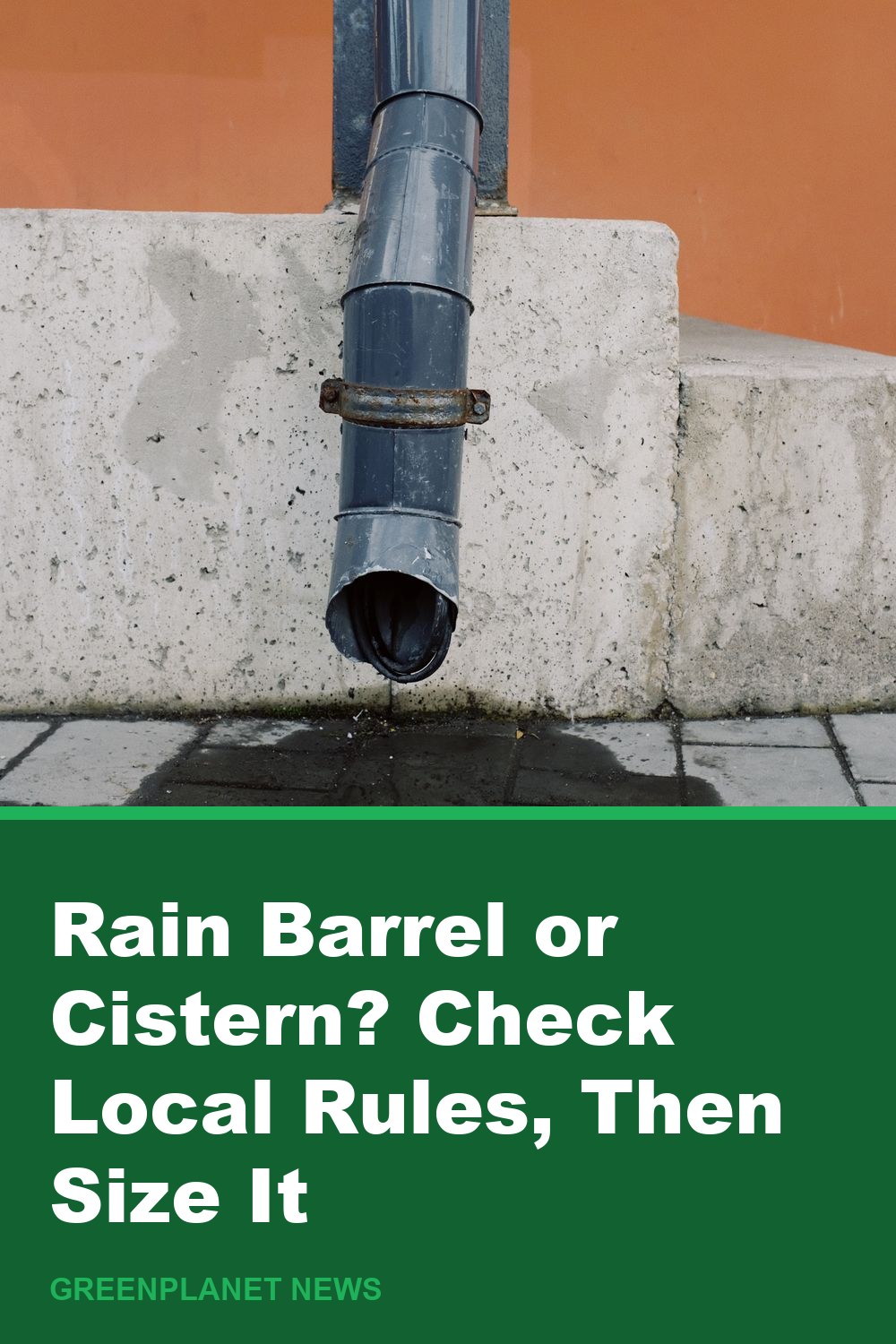

A single inch of rain on a 1,000-square-foot roof can produce about 620 gallons of water. A typical rain barrel holds only 50 to 60 gallons. That gap is the main thing to understand before you spend money on rainwater storage, and so are the local rules, which vary from state to state. Get both right and you can water your garden from the sky instead of the tap.
Why rainwater storage is back on the radar
Heavy downpours and dry spells are both putting pressure on water supplies. According to the Fifth National Climate Assessment, published in 2023, the total rain falling on the wettest 1% of days rose 60% in the Northeast and 45% in the Midwest between 1958 and 2021. Those were the two largest increases in the country. The US Environmental Protection Agency says human-caused warming has contributed to more of these heavy-rain episodes.
A lot of rain in a few hours does not mean water is there when you need it. Yale Climate Connections reports that South Florida went through months of drought before up to 10 inches of rain fell in about three hours on 26 October 2025 in northeast Broward and southeast Palm Beach. Homes flooded and more than 100 vehicles were stranded. According to the National Weather Service, the rain only temporarily ended the drought, and moderate drought returned by mid-November.
That is the case for storing some of a storm for later. Adriana Zúñiga-Terán, an associate professor at the University of Arizona's School of Geography, Development and Environment, told Yale Climate Connections that rainwater harvesting can help households get through dry periods, and that a single intense storm can fill large tanks. She added that homeowners can keep plants and trees alive during shortages without using drinking-quality water.
Step one: check the rules where you live
Yale Climate Connections notes that both the potential for rain harvesting and the rules governing it differ from one US state to another. So the first job is a phone call or a web search, before you shop.
The level of the system matters too. A simple barrel under a downspout is the easy end. A cistern may need a pump or local permits, particularly if it will be buried, connected to your plumbing or attached structurally to the house. If you only want to water the garden, a barrel is the lower-hassle route.
Questions to ask your city or county, or your state's water agency:
- Are there any limits on collecting rooftop rainwater in my state?
- Do barrels need a permit, and does a cistern?
- Are there extra rules for underground tanks, or for tanks connected to plumbing?
- Does a local garden or conservation programme offer classes or discounted barrels?
That last question is worth asking. In Broward County, Florida, the University of Florida's Master Gardener Volunteer Program runs a class on using and installing rain barrels. Resident Mario Ríos completed it and received two barrels through the local programme. He started collecting rain after testing his well water and finding sodium intrusion, and he said his plants, especially his orchids, looked much healthier once he switched.
Step two: size the system to your roof
The rule of thumb in the Yale Climate Connections report is that one inch of rain on one square foot of surface gives roughly 0.62 gallons. That is before any losses in the system, so treat it as a ceiling. Lorna Bravo, an urban horticulture agent with Broward County Parks and Recreation, gave a UF/IFAS example: collecting 1,000 gallons from a two-inch rain would take about 1,200 square feet of catchment area.
Here is what the 0.62 rule looks like for a few roof sizes, measured against 55-gallon barrels like Ríos's.
| Roof catchment area | Water from 1 inch of rain (before losses) | 55-gallon barrels to hold it all |
|---|---|---|
| 500 sq ft | about 310 gallons | 6 |
| 1,000 sq ft | about 620 gallons | 12 |
| 1,500 sq ft | about 930 gallons | 17 |
You will almost never want to capture every drop, and the table shows why. Catching a large share of one good storm takes many barrels or a cistern. Bravo's advice is to match storage capacity to the roof and the intended use, rather than buying the biggest tank you can fit.
Barrel or cistern: which fits?
Bravo describes a rain barrel as generally a small container connected to a downspout. A cistern is a bigger storage tank that can sit above or below ground. According to Yale Climate Connections, the EPA counts both as green infrastructure for holding and reusing rainwater.
For most households, a barrel works as a supplementary water source for potted plants, vegetable beds, newly planted shrubs and small garden areas. A cistern can supply more for irrigation and other outdoor uses, but it may need a pump or permits. Depending on treatment and local rules, cisterns can also serve other uses that do not require drinking-quality water.
Two practical limits come up repeatedly:
- Space. Zúñiga-Terán points out that the bigger the cistern, the more water it holds and the more room it takes.
- Getting the water out. You need gravity or a pump. Rain harvesting systems usually have this solved, she says, but check how yours will work.
Weight is the other thing to plan for. Bravo's figure is that a full 55-gallon barrel weighs roughly 460 to 485 pounds. That is a reason to choose a solid, level spot before you fill anything.
What this means for you
The savings come from replacing tap water outdoors with stored rain. The reports give no dollar figures, so work out your own: look at your water bill for the summer months when the garden is thirstiest, and think about how much of that goes on plants.
- Call or search first. Confirm your state and local rules, and ask about permits if you are thinking of a cistern.
- Measure the roof section that drains to one downspout. Multiply its area in square feet by 0.62 to see the gallons per inch of rain.
- Decide what you want to water. Pots, a vegetable bed and new plantings suit a barrel. Larger lawns and beds may need more storage.
- Pick the storage to match. A barrel or two for small jobs, a cistern if you need more and the rules allow it.
- Choose a firm, level base that can take roughly 460 to 485 pounds per full 55-gallon barrel.
- Plan how the water gets out, whether by gravity from a raised stand or by a pump.
- Look for local classes or barrel programmes. They can cut costs and teach you how to install the system.
There is a secondary benefit. During a storm, storage can temporarily reduce the water running off roofs, paths and streets into drains. That runoff can pick up pathogens, nutrients, sediment and metals on its way to canals, rivers and coasts.
FAQ
Is it legal to collect rainwater in the US?
Rules differ by state, according to Yale Climate Connections, so check yours. Cisterns can bring extra requirements such as permits, especially if buried, tied into plumbing or attached to the house. Your city, county or state water agency is the right place to ask.
How much water can my roof collect?
As a rule of thumb, one inch of rain on one square foot gives about 0.62 gallons. A 1,000-square-foot roof could yield around 620 gallons from one inch of rain, before system losses. In practice you will collect less.
Is one rain barrel enough?
It depends on what you water. A typical barrel holds 50 to 60 gallons, which suits pots, vegetable beds, new plants and small garden areas. To capture a big share of a heavy storm, you need several barrels or a cistern.
- 55-gallon rain barrel with spigot and overflow
- Downspout diverter kit to feed a barrel
- Rain gauge to track how much your roof collects
As an Amazon Associate I earn from qualifying purchases. Links open a search on the Amazon store for your country.
Watch or listen to this episode
Sources
Photo: ready made / Pexels

I'm an Italian creator who builds apps, games and websites. I run GreenPlanet News with the help of AI tools: every article starts from the sources linked above, and I check what goes out. I'm not a doctor, a lawyer or a financial adviser. Spotted a mistake or have an idea? Write to me.
Instagram @spartaco_94_My websiteWrite to meAbout this blog










 Green Investing 101: A Beginner's Guide to Sustainable Investments





