 GreenPlanet News

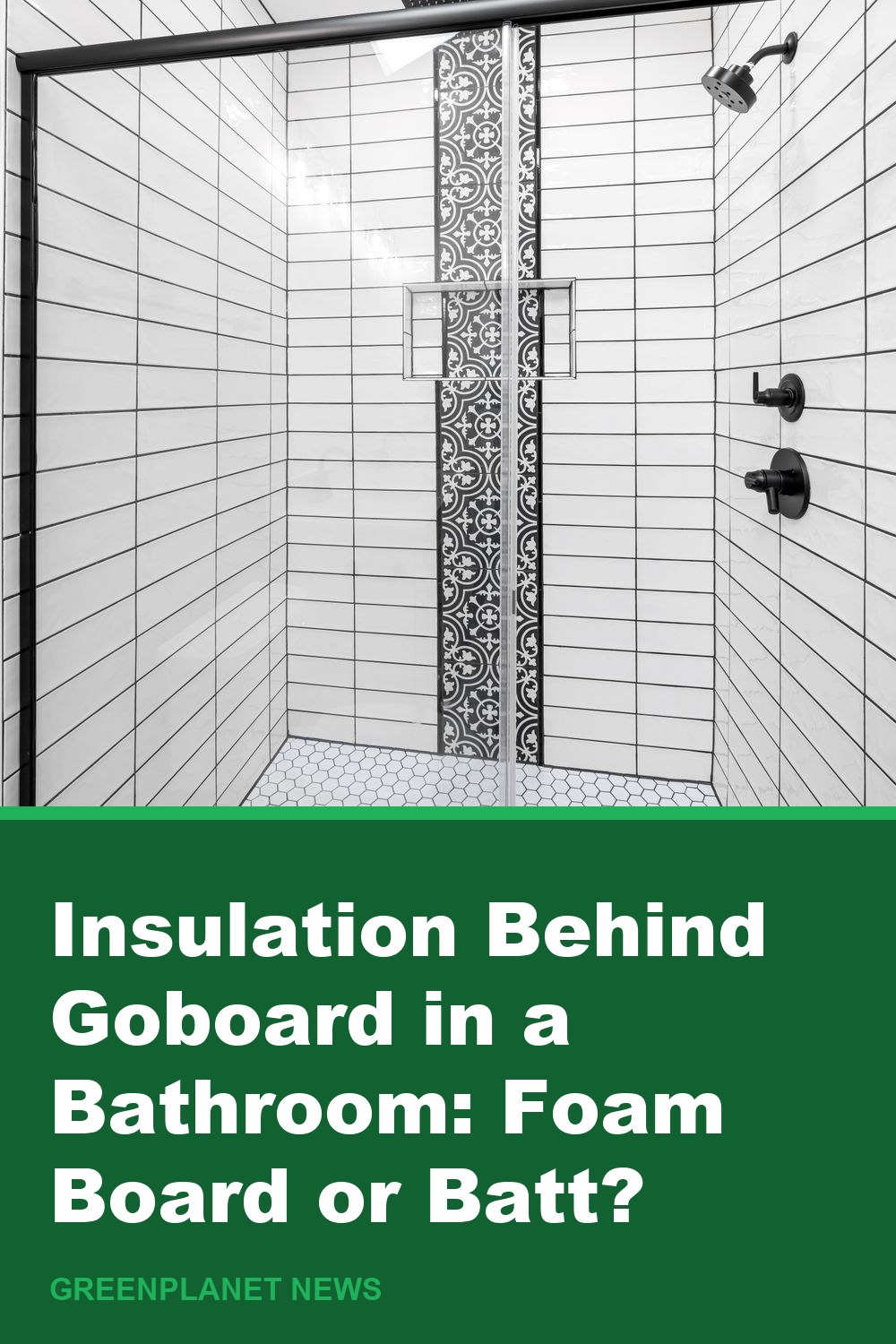

- On a thin furred-out wall, rigid foil-faced foam board fits better than a batt, which needs a deeper cavity to work as intended.
- Batts exposed to moving air lose R-value to wind-washing, so any gap beside insulation should be sealed off or kept deliberately clear and ventilated.
- Foil-facing direction and whether you need insulation at all depend on your wall and the manufacturers' instructions, so confirm both before buying.
If you are tiling a bathroom with Goboard on the inside of an exterior wall, rigid foil-faced foam board is usually the better fit than batts, because it works in a shallow gap and does not soak up water. Whether the wall needs insulation at all depends on what it backs onto. The question is live right now: a Florida remodeler named Dave recently asked Green Building Advisor (GBA) exactly this. He planned 3/4" foil-faced polyisocyanurate behind Goboard on shower walls, on the inside of an exterior block wall with 3/4" furring strips. He had heard conflicting advice on which way the foil should face, and some people told him Goboard needs no insulation behind it. If you are pricing a bathroom remodel, you are probably weighing the same choices.
Rigid foam board vs batt insulation behind Goboard
Dave's wall is a good test case. A 3/4" furring strip gives you a 3/4" depth to fill, and batts are made for deeper stud cavities. The comparison below is qualitative on purpose: R-value per inch differs by product, so read the label on whatever you are considering rather than trusting a rule of thumb.
| Criterion | Rigid foam board (foil-faced polyiso) | Batt insulation |
|---|---|---|
| Fit in a shallow furring gap | Made in thin sheets, so a 3/4" board can fill a 3/4" gap | Designed for deeper cavities; squeezing it into a thin gap defeats its purpose |
| Cost | Usually costs more per square foot; compare local prices | Usually cheaper per square foot, but only worth it if it fits properly |
| Moisture in a shower area | Solid board that does not absorb water like a fibrous batt | Fibrous material that is harder to keep dry if moisture gets behind the board |
| R-value per inch | Check the label; foam board is generally made for thin spaces | Check the label; it needs depth to deliver its rated value |
| Air movement behind it | Boards can be fitted tight to the wall, leaving little room for air to circulate | Loses R-value if air moves around it (wind-washing) |
| Best location | Inside of masonry walls with thin furring | Full-depth stud cavities |
Choose foam board if…
- Your wall is masonry or block with 3/4" furring strips, as in Dave's case.
- The wall faces outdoors and you want the most insulation in the least depth.
- You want a material that tolerates damp conditions behind a shower surround.
- You can follow the maker's instructions for taping or sealing the joints.
Choose batts if…
- You have a real stud cavity that the batt can fill without being squashed.
- Budget is the main constraint and the batt will sit snug with no gaps or voids.
- You can keep air from moving behind the batt, and the wall surface layers are sealed well.
When a small air gap matters
Gaps beside insulation are where performance quietly disappears. In a separate GBA thread about a roof, expert member Malcolm Taylor said batt insulation left exposed to cold moving air loses R-value to wind-washing. He also said the less gap there is between a batt and the layer covering it, the less R-value is lost to convective air currents.
His advice that a ventilated air space needs at least an inch to work concerned a roof, where the gap is there on purpose so air can flow. Do not copy that number onto a bathroom wall. The takeaway for a shower wall is different: either fill the space snugly or know exactly why you left it open. A loose, half-filled gap behind the board is the worst of both.
Taylor also pointed out that air sealing matters more than the vapour retarder. Painted drywall can serve as one, but the bigger job is keeping moist indoor air from leaking through gaps, which depends on how well penetrations such as light fixture boxes are sealed. In a bathroom, think of the fan housing, light boxes and any pipe or wiring holes. Our post on air sealing before you insulate covers the order of work.
Do you need insulation behind Goboard at all?
Dave heard both answers, and both can be right depending on the wall. If the shower wall is a partition between two heated rooms, there is little to insulate against. If it is the inside face of an exterior block wall, as in his case, insulation is a reasonable choice. A shower wall is a small area, so the energy savings alone will be modest. The case for insulating rests on comfort and on doing it while the wall is already open, when it costs little extra.
Steps to decide and install
- Identify the wall. Is it an exterior wall, a partition, or a masonry wall with furring? That sets the whole decision.
- Measure the depth you have. With 3/4" furring you have 3/4" to work with. Pick insulation that fits that depth without compression.
- Read two sets of instructions. Check the Goboard maker's installation instructions and the foam maker's data sheet, including how to orient any foil facing.
- Compare R-value per inch on the labels. Multiply by your actual thickness, then compare cost per square foot.
- Seal penetrations. Close up gaps around boxes, pipes and the fan housing before the board goes on.
- Fix ventilation. A fan that moves moist air outdoors protects every layer behind your tile. See our guide to installing a bathroom exhaust fan duct with a riser box.
- Ask your building department. Local rules and climate vary between the US and UK, and the department can tell you what applies.
If you are planning the whole remodel, the Honest Toolkit renovating checklist is a printable way to keep the steps in order.
The mistake people make
The common error is treating moisture-resistant board as a substitute for planning what sits behind it. A tough surface does not fix a wet cavity, a leaky wall or a missing exhaust fan. The second mistake is buying insulation first and discovering it does not fit the gap, then stuffing in a batt and leaving air channels around it. Decide the wall type and depth first, then the material.
Steamy rooms also show up as condensation elsewhere, so our post on stopping condensation on windows is worth a look if your bathroom window streams after showers.
FAQ
Which way should the foil face on foam board behind Goboard?
This is the point that left Dave with conflicting advice, and there is no single answer that fits every wall. Follow the foam maker's instructions and the backer board maker's instructions, and confirm with your local building department, especially in a hot humid climate like Florida's.
As an Amazon Associate I earn from qualifying purchases: if you buy through these links I may earn a small commission, at no extra cost to you. Each link opens a search on the Amazon store for your country.
Watch or listen to this episode
Sources
Photo: Curtis Adams / Pexels

I'm an Italian creator who builds apps, games and websites. I run GreenPlanet News with the help of AI tools: every article starts from the sources linked above, and I check what goes out. I'm not a doctor, a lawyer or a financial adviser. Spotted a mistake or have an idea? Write to me.
Instagram @spartaco_94_My websiteWrite to meAbout this blogWritten by Ciro Irmici (Ciro Simone Irmici), with the help of AI tools. Ciro Irmici's website











 Green Investing 101: A Beginner's Guide to Sustainable Investments





