 GreenPlanet News

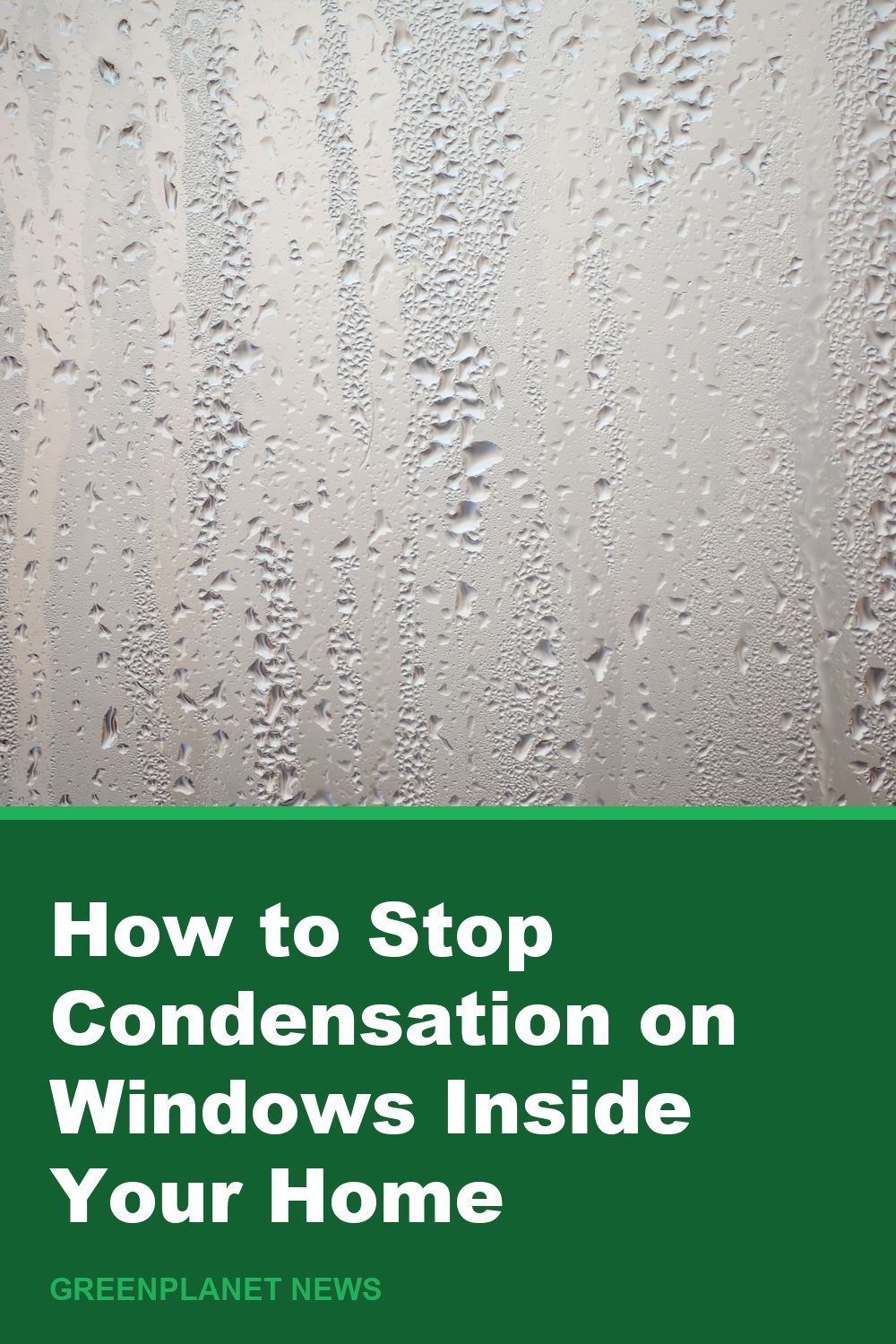

You open the curtains on a cold morning and the glass is streaming. Water pools on the sill, the frame edges go black, and you wipe it all down again tomorrow. This happens in rented flats and owned houses, with single or double glazing.
The short answer: windows run wet when indoor air holds more moisture than the cold glass can tolerate. Fix it in two ways. Put less water into the air, and get the wet air out. Warming the glass slightly helps too. Start with the free fixes and only buy a dehumidifier if the readings stay high.
Here's the physics in one line. Every parcel of air has a dew point, the temperature at which its moisture turns to liquid. Air at 20°C and 60% relative humidity has a dew point of about 12°C. Air at 20°C and 50% drops to about 9°C. If the inner pane is colder than the dew point, it gets wet. On a frosty night, single glazing's inner face can fall to around 5°C. Double glazing usually stays warmer, but the edges and frames run colder than the middle. That's why the bottom corners drip first.
Mornings are worst for two reasons. The heating has been off for hours, so the glass is at its coldest. And people sleeping in a closed bedroom breathe moisture into the air all night.
The core sequence, cheapest first:
- Measure humidity and note which windows run wet.
- Cut moisture at the source: lids, laundry, showers.
- Run extractor fans long enough.
- Open trickle vents and leave them open.
- Air rooms in short, wide bursts.
- Keep heating steady instead of off-on.
- Add a dehumidifier only if humidity stays above about 60%.
All costs below use an example tariff: £0.30 per kWh for electricity and £0.07 per kWh for gas. Swap in your own figures from your bill. If you're unsure how unit rates work, the energy regulator explains tariffs and bills.
1. Measure the humidity and the glass
Buy a basic digital hygrometer. They cost a few pounds and run on a coin cell for months. Put it in the bedroom at chest height, away from the window.
Check it at bedtime and on waking for three days. Write down the readings. Aim for 40–60% relative humidity in winter. If you wake to 70% or more, the windows will run almost every cold night.
Note which rooms suffer. Bedrooms point to breathing and closed doors. Kitchens and bathrooms point to cooking and showers. Running cost: effectively zero.
2. Cut moisture at the source
A busy household releases several litres of water into the air every day. The amount varies a lot with cooking, showers and laundry. Stop it before it spreads.
- Put lids on pans. This keeps steam in and also cuts cooking energy, because the pan reaches the boil faster.
- Dry laundry outside or in a tumble dryer vented outdoors. A full load drying indoors can release a couple of litres or more.
- Close the bathroom door during and after showers, so steam doesn't drift to cold bedrooms.
- Keep furniture 5–10 cm off outside walls so air can move behind it.
Running cost: zero. Pan lids actually save a little gas or electricity.
3. Run extractor fans long enough
Most people switch the fan off when they leave the room. The air is still saturated. Leave the bathroom fan on for 15–20 minutes after a shower. Run the cooker hood during cooking and for 10 minutes after.
A typical bathroom fan draws about 5–20 W. Work it out for a 15 W fan running 2 hours a day:
15 W × 2 h = 30 Wh = 0.03 kWh. 0.03 × £0.30 = £0.009 a day, about £3.30 a year.
Cooker hoods use more, often 50–200 W, but run for less time. A 100 W hood for 40 minutes costs about 2p. The fan also pulls out some warm air, but for short runs that loss is small. Clean the grille every few months; a clogged fan moves far less air.
4. Open trickle vents
Many modern windows have a slot vent along the top of the frame. Slide it open and leave it open, especially in bedrooms. It gives a slow, constant air change without a draught.
It does cost heat. Here's a rough example. Say the vent lets through 3 litres of air per second and it's 15°C warmer inside than out. Heat loss is about 3 L/s × 1.2 J per litre per °C × 15°C ≈ 54 W. Over 24 hours that's about 1.3 kWh of heat.
- Gas boiler at 90% efficiency: 1.3 ÷ 0.9 × £0.07 ≈ 10p a day.
- Electric heaters: 1.3 × £0.30 ≈ 39p a day.
Real airflow varies with wind and vent size, so treat this as a range. General guidance on home ventilation and air sealing makes the same point: seal draughts, but keep controlled ventilation.
5. Air rooms in short bursts
Open the bedroom window wide for 5–10 minutes on waking, with the door shut. Do the same after cooking or drying anything. Wide and short swaps the air fast while walls and furniture keep most of their heat. A window left tilted for hours does the opposite.
Example: a 30 m³ bedroom, 15°C warmer inside than out. Replacing all the air once loses about 30 × 1.2 × 15 ≈ 540 kJ, or 0.15 kWh. Allow up to 0.3 kWh including some cooling of surfaces.
- Gas: about 1–2p per airing.
- Electric heating: about 5–9p per airing.
Wipe the glass with a squeegee or cloth first, and empty it into the sink. Otherwise that water just evaporates back into the room.
6. Keep heating steady
Warmer glass means a lower chance of hitting the dew point. Rooms heated hard in the evening and then left to go cold overnight condense badly. A low, steady setting overnight helps.
Keep rooms at roughly 16–18°C overnight instead of switching off completely. The extra cost depends heavily on insulation. As a worked example, if steady overnight heating adds 2–4 kWh of gas: 2–4 × £0.07 ÷ 0.9 ≈ 16–31p a night. On electric heating the same heat costs 60p–£1.20. That's a real cost, so try the free steps first.
7. Add a dehumidifier if readings stay high
If your hygrometer still reads above 60% after steps 2–6, buy a dehumidifier. Two types exist:
| Type | Typical power | Best in | Example cost, 6 h/day |
|---|---|---|---|
| Compressor | 150–300 W | Rooms above about 15°C | 200 W × 6 h = 1.2 kWh = 36p/day, about £11/month |
| Desiccant | 300–600 W | Cold rooms, unheated spaces | 500 W × 6 h = 3 kWh = 90p/day, about £27/month |
A desiccant unit gives off its electricity as warmth, so in a cold room part of that cost replaces heating. Run it with doors and windows shut. Use the built-in humidistat set to 50–55% so it stops when the job's done. Look for efficiency-rated dehumidifiers that remove more litres per kWh.
Here's how the fixes compare
| Fix | Example running cost |
|---|---|
| Pan lids, laundry, closed doors | Free or saves money |
| Extractor fan, 15 W, 2 h/day | About 1p/day |
| Trickle vent | About 10–39p/day |
| Short airing | About 1–9p each |
| Steady overnight heating | About 16p–£1.20/night |
| Dehumidifier | About 36–90p/day |
Common mistakes
- Drying clothes on radiators. It puts litres of water straight into a warm room, and it ends up on the coldest glass. It also blocks heat from reaching the room.
- Blocking vents to stop draughts. Taping over trickle vents or air bricks traps moisture. Never block vents in rooms with a fuel-burning appliance such as a gas fire or boiler. Those need air to burn safely.
- Leaving water on the sill. Wiping only the middle of the pane leaves the frame and seals wet. That's where black mould starts. Dry the whole frame each morning.
If mould keeps returning after all seven steps, the cause may be a leak, rising damp or a cold bridge in the wall. Get a qualified surveyor to look. If you're renting, report it to your landlord in writing. If anyone in the home has breathing problems that seem linked to damp, speak to a doctor.
Figures are worked examples: check your own tariff, the appliance labels and your local rules before you decide.
Watch or listen to this episode

I'm an Italian creator who builds apps, games and websites. I run GreenPlanet News with the help of AI tools: every article starts from the sources linked above, and I check what goes out. I'm not a doctor, a lawyer or a financial adviser. Spotted a mistake or have an idea? Write to me.
Instagram @spartaco_94_My websiteWrite to meAbout this blog










 Green Investing 101: A Beginner's Guide to Sustainable Investments





