 GreenPlanet News

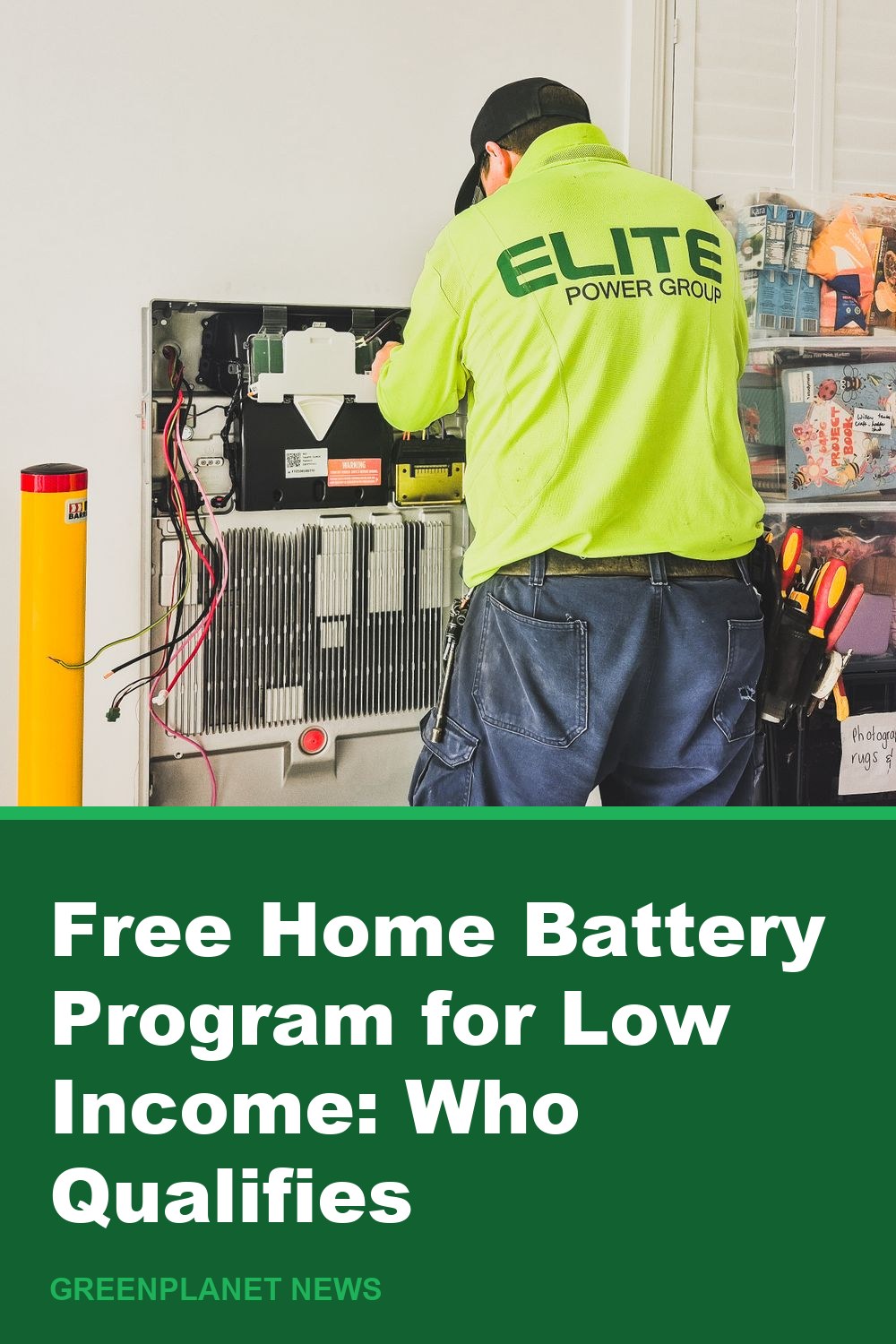

- National Grid's Fall River pilot gives 125 low-income homes a free battery with at least four hours of backup, plus $150 a year for five years.
- Eligibility follows income: be on National Grid's low-income rate, or fall under the equivalent limit, about $103,000 a year for a household of four.
- Free batteries are still rare: Haven's usual customers pay from $29 a month, so ask who owns the battery and what happens after 10 years.
Yes, free home battery programs for low-income households exist, but they are pilots with a limited number of places. The newest is in Massachusetts. National Grid has just launched BatteryBackup+ with the storage company Haven Energy, and it will put no-cost batteries into 125 homes in Fall River, according to Canary Media. Each household gets a battery with at least four hours of backup power plus $150 a year for five years. It matters now because utilities are testing how to reach low-income customers, and a successful pilot could be copied elsewhere in the state. Even if you do not live in Fall River, the way this one is built shows you what to ask your own utility.
Who qualifies for the Fall River battery pilot?
Two routes lead in. You qualify if you are already on National Grid's low-income discount rate. You also qualify if your household meets the equivalent income limits. Canary Media gives one example: about $103,000 a year for a four-person household. That is a high ceiling, which tells you the programme is aimed at working households squeezed by energy prices, not only those on the lowest incomes.
There is a location test as well. The pilot covers Fall River only, a former mill city where median household income is just above half the statewide average. National Grid has described the project as part of its Electric Sector Modernization Plan, a document Massachusetts requires utilities to file. The utility says it wants to learn how to recruit low-income customers and keep them taking part. Steven Caldwell, National Grid's vice president of energy efficiency, called it a test of grassroots engagement that can scale at reasonable cost.
What do you actually get, and what does it do for your bills?
The package has four parts:
- A free battery that can supply at least four hours of backup power during an outage.
- Installation and maintenance handled by Haven.
- $150 a year for five years, which adds up to $750.
- A choice after 10 years: work with Haven to take over ownership and management, or have the battery removed.
The cash is the direct bill help. The wider effect is indirect. Haven enrols the batteries in programmes where many home batteries send power to the grid together at times of high demand. Canary Media notes this can reduce the need for power from pricier, dirtier plants. Over time it can also help avoid costly grid upgrades that customers would otherwise pay for. Our post on virtual power plants and getting paid to help the grid covers how that sharing works for a household.
On outages, four hours is a minimum, not a promise of days. How long a battery lasts depends on what you plug into it, so a list of your must-run items (fridge, phone chargers, lights, any medical equipment) is worth drawing up before you ask any programme about runtime.
How does this compare with other battery programmes?
Free is the exception. Haven works in seven states, with eight more coming, and in most places its customers pay a monthly fee starting at $29 for the battery and services. The company earns money by enrolling batteries in state programmes and uses part of that revenue to make the purchase cheaper for customers.
The Fall River pilot is not Haven's first no-cost scheme. Last year it launched one in California for low-income households. It has contracted with about 2,500 homes and finished installations in about 60% of them, so waiting for an install date is normal.
Sharing home batteries with the grid is also spreading on its own:
- Vermont's Green Mountain Power runs a network of 10,000 residential batteries.
- Massachusetts' ConnectedSolutions began as a pilot in 2016 and has been adopted or adapted in Connecticut and Rhode Island.
- New Jersey has just launched a programme that pays residents to share their battery capacity.
If you already own a battery, those payment programmes may matter more to you than the free-battery pilots.
How do you check whether your utility offers something similar?
No central list exists, so you have to ask. Work through these steps:
- Find out whether you are on your utility's low-income rate. In Fall River, being on it is the easiest way in, and many programmes reuse the same income test.
- Search your utility's website for "battery", "storage", "backup power" and "income-qualified". Check the pilot or innovation pages as well as the main rebate pages.
- Call or email customer service and ask whether any battery pilot, discounted battery or battery payment programme covers your address and income.
- Ask about location rules. The Fall River pilot is limited to one city, so a scheme can exist and still not reach your street.
- Ask how households are picked when places are capped, for example whether there is a waiting list.
- Get the terms in writing before you sign (see the next section).
- Check your own rate and storage options if nothing is on offer. Our guide to rising electricity bills and your utility's rate case shows where to look for changes that affect you.
If you are in the UK, the Massachusetts pilot is not available to you, and the reporting describes no UK equivalent. The same questions still apply when you ask your supplier or local council about any storage support.
What can go wrong, and what should you ask before signing?
A free battery still comes with conditions. Before you agree to one, get clear answers on these points:
- Who owns it? In Fall River, Haven installs and maintains it, and ownership only becomes an option after 10 years.
- Who controls it? Haven manages when the battery joins grid programmes. Ask how that affects the charge kept for your own outages.
- What happens at the end? Ask what taking over or removing the battery involves, and whether any cost is attached.
- Is it really free? Haven's standard model charges from $29 a month, so confirm in writing that no monthly fee applies to you.
- How long is the wait? California's roughly 60% completed installations show that signing up and getting a battery are not the same day.
You should also treat the $150 as a modest payment, not a big cut to your bills. The bigger value is the free hardware and the backup, which is why the ownership terms matter so much.
What are the key dates and terms?
- November 2026: National Grid launches BatteryBackup+ in Fall River.
- Years 1 to 5: participants receive $150 a year.
- Year 10: participants can work with Haven to take over ownership and management of the battery, or have it removed.
Canary Media gives no application deadline, so treat the 125 places as limited and ask National Grid how to register interest.
What can you do while you wait?
If you are not eligible or there is no programme near you, small steps still help. Measure what your essentials draw, and keep a rechargeable light and charged power banks ready for outages. Our look at home backup power and whether it beats a battery compares the paid options. The Honest Toolkit energy-efficiency guide is a free place to start on cutting the bills a battery cannot touch.
FAQ
Can a renter get a free home battery?
The Fall River pilot's published rules turn on income and enrolment in the discount rate, and they do not say whether renters can take part. Ask National Grid directly, and ask any landlord about permission for an installation.
Will a free battery lower my electric bill?
The direct help in Fall River is the $150 a year for five years. Savings from the grid-sharing side go mainly to the wider system, through less need for costly peak power and fewer expensive upgrades. Do not expect a large drop in your own monthly bill.
As an Amazon Associate I earn from qualifying purchases: if you buy through these links I may earn a small commission, at no extra cost to you. Each link opens a search on the Amazon store for your country.
Watch or listen to this episode
Sources
Photo: Elite Power Group / Pexels

I'm an Italian creator who builds apps, games and websites. I run GreenPlanet News with the help of AI tools: every article starts from the sources linked above, and I check what goes out. I'm not a doctor, a lawyer or a financial adviser. Spotted a mistake or have an idea? Write to me.
Instagram @spartaco_94_My websiteWrite to meAbout this blogWritten by Ciro Irmici (Ciro Simone Irmici), with the help of AI tools. Ciro Irmici's website











 Green Investing 101: A Beginner's Guide to Sustainable Investments





