 GreenPlanet News

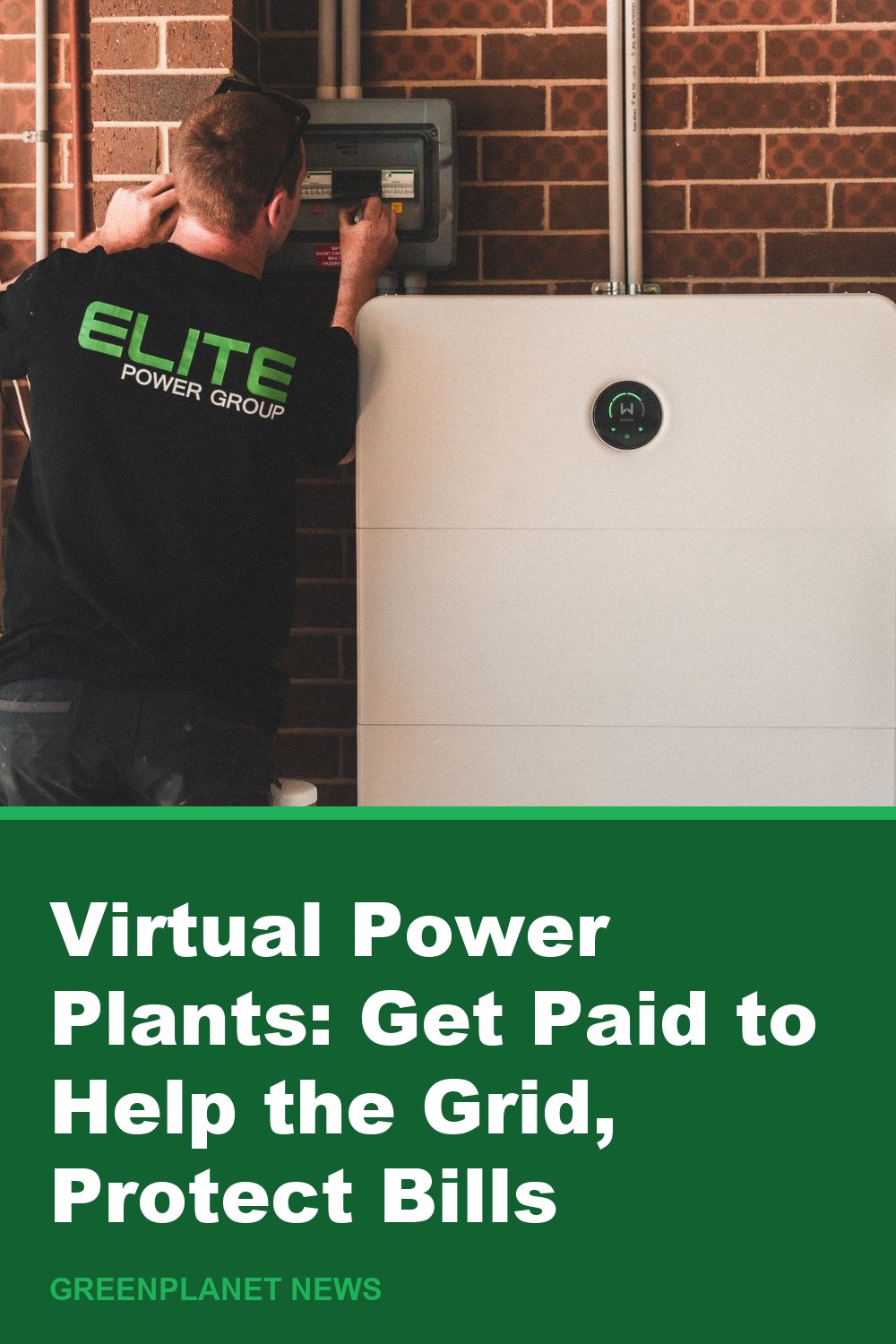
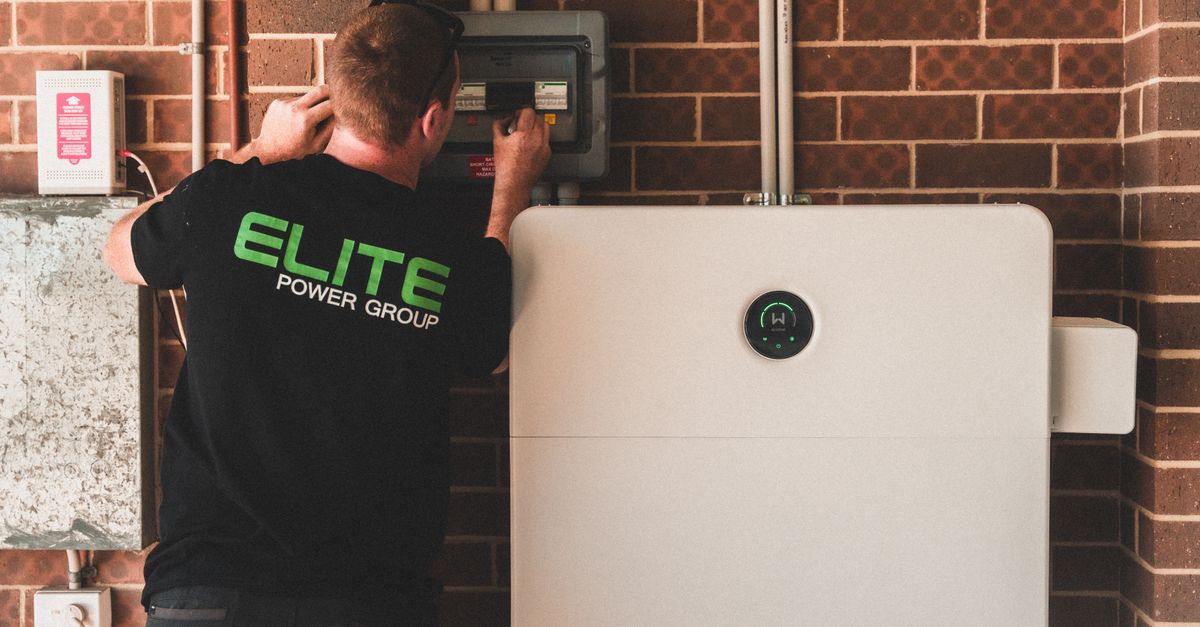
If you have a home battery, rooftop solar or other smart energy equipment, your utility may pay you to let it use that equipment when the grid is stretched. According to a new report from the consultancy The Brattle Group for The Pew Charitable Trusts, programmes like this, called virtual power plants (VPPs), could cut the average US household electricity bill by $122 a year by 2050. They do it by helping avoid expensive grid building. With data centers pushing up demand forecasts, the question of who pays for new power plants and power lines is landing on household bills. Joining a VPP is one way to be on the receiving end of the money instead.
What a virtual power plant actually is
Canary Media describes a VPP as a network of rooftop solar systems, home batteries and other distributed energy equipment that a utility can control remotely. The aim is to free up space on the grid that already exists. Nothing new is built. Thousands of small devices act together like one power station.
Brattle's analysis, also reported by Canary Media, describes paying many homes and businesses to use less electricity, or to share their solar and battery power, when demand peaks. That can be cheaper than building more generation and grid infrastructure. The catch is that utility planners have to trust that the capacity will show up when it is needed.
Why data centers make this relevant now
Nobody knows how much electricity the data center boom will really need. Canary Media's Jeff St. John puts the dilemma plainly. If utilities build too little, reliability and economic growth suffer. If they build too much, customers may pay for infrastructure nobody uses.
Brattle tested a scenario in which actual demand growth comes in 5% below forecasts between now and 2030. In that case, overbuilding added about $84 billion in costs for US utility customers from 2030 to 2040. Expanding VPPs cut those costs by $33 billion, roughly 40%.
Ryan Hledik, the report's lead author and a principal at Brattle, says the reason is flexibility. VPPs are "smaller modular resources" that can be brought online later, so planners can wait to see whether the demand arrives before building them.
A second report, from researchers at Georgetown and Duke universities, makes a similar case for batteries over gas. Utilities are planning more than 60 gigawatts of new gas plants for data center demand, and around 90 GW of on-site gas generators have been proposed nationwide. If those data centers never fully appear, other customers could be left paying for the gas capacity. The researchers say batteries are cheaper than round-the-clock gas where a few hours of stored energy will do. They are also modular, so deployment can be scaled up or down as demand shifts.
The numbers at a glance
| Figure | What it says | Why it matters to you |
|---|---|---|
| 113 GW | US distributed energy capacity usable for VPPs in 2025 | Your battery or solar system is part of this pool. |
| 524 GW | Capacity needed by midcentury in Brattle's scenario, more than four times today | Utilities will need many more participants. |
| $614 billion | Grid investment that could be avoided at that scale | Less spending to recover through bills. |
| $122 a year | Estimated drop in the average household bill by 2050 | The potential saving, on top of any credits you earn. |
| $84 billion | Overbuilding cost in a scenario where demand falls 5% short of forecasts (2030 to 2040) | The risk customers carry if data center demand disappoints. |
| $33 billion (about 40%) | Reduction in that cost with expanded VPPs | Flexible equipment makes the downside smaller. |
| 60 GW and 90 GW | New utility gas plants planned, and on-site gas generators proposed, for data centers | Batteries are the alternative to this gas build-out. |
What this means for you
The reports are about the whole system, not a promise of a specific credit for your home. Brattle does find that the grid benefits of VPPs are worth more than what participants are paid, so there is room for programmes to compensate you. But payment levels, rules and equipment vary by utility, and the sources give no per-household earnings. Treat the figures as a reason to look into a programme, not as a forecast of your own income.
Here is a practical checklist before you sign up:
- Ask your utility or supplier what is on offer. Search its website for terms like "demand response", "battery programme" or "flexibility". Ask directly whether a VPP-style scheme exists where you live. The research covers the US, so UK readers should ask their supplier or network operator what similar schemes they run.
- Check which equipment qualifies. The reports mention rooftop solar and home batteries, plus other distributed equipment. Whether a smart thermostat or EV charger is accepted depends on the programme, so ask for a list of eligible models.
- Find out how payment works. Is it a bill credit or a cash payment, and is it a fixed amount or based on each event?
- Ask how often and how long. Find out how many times a year the utility can call on your equipment, for how long, and whether you can opt out of an individual event.
- Read the fine print on changes. Brattle notes that payments can be adjusted downward if the capacity turns out not to be needed. Ask whether the rate is guaranteed for a set period.
- Check your own needs. If you rely on your battery for backup power, ask how much charge the programme leaves in reserve.
Why the details of the deal matter
Hledik warns that volatile incentives make a programme less attractive. If payments swing up and down, participants lose interest. He still argues that adjusting payments is better than paying for an unneeded power plant or substation for decades. For you, that means a steady, clearly written offer is a good sign, and a vague or constantly changing one is worth questioning.
Maureen Quinlan, senior manager of energy modernization at Pew, says the next step is building VPP benefits into how utilities plan their grids. Pew has published a policy playbook and a state policy explorer tool. If you want programmes in your area to improve, those are a place to start, and you can raise the issue with your state regulator or utility.
Where home batteries fit in the bigger picture
The Georgetown and Duke report says batteries are already being deployed at pace. Jackson Ewing of Duke's Nicholas Institute notes that lithium-ion batteries cannot provide round-the-clock power but can cover large portions of data center needs. BloombergNEF now forecasts US energy storage deployment passing 11,000 gigawatt-hours by 2036. That is 30% higher than its forecast of six months earlier, with data center demand driving much of the growth.
So a battery in your garage is part of the same trend as the large installations. Whether you already own one or are thinking of buying, ask about VPP eligibility before you commit. It could affect how quickly the equipment pays for itself.
FAQ
What is a virtual power plant?
It is a group of home batteries, solar systems and similar equipment that a utility can control remotely, according to Canary Media. Together they ease pressure on the grid at busy times, so the utility needs less new infrastructure.
Will joining a virtual power plant lower my electricity bill?
Participants are paid for their contribution, and Brattle estimates that wider use of VPPs could cut the average US household bill by $122 a year by 2050 by avoiding grid spending. Your own credit depends on your utility's programme, so ask for the payment terms in writing.
Can I join with just a smart thermostat or EV charger?
The reports describe rooftop solar, home batteries and other distributed equipment, and they don't list specific devices. Eligibility is set by each utility, so check its programme page or call to confirm which devices and models it accepts.
Sources
- Canary Media: Virtual power plants can help avoid overbuilt grid if AI boom goes bust
- Canary Media: Why batteries, not gas plants, should be data centers' first choice
Photo: Elite Power Group / Pexels

I'm an Italian creator who builds apps, games and websites. I run GreenPlanet News with the help of AI tools: every article starts from the sources linked above, and I check what goes out. I'm not a doctor, a lawyer or a financial adviser. Spotted a mistake or have an idea? Write to me.
Instagram @spartaco_94_My websiteWrite to meAbout this blog










 Green Investing 101: A Beginner's Guide to Sustainable Investments





