 GreenPlanet News

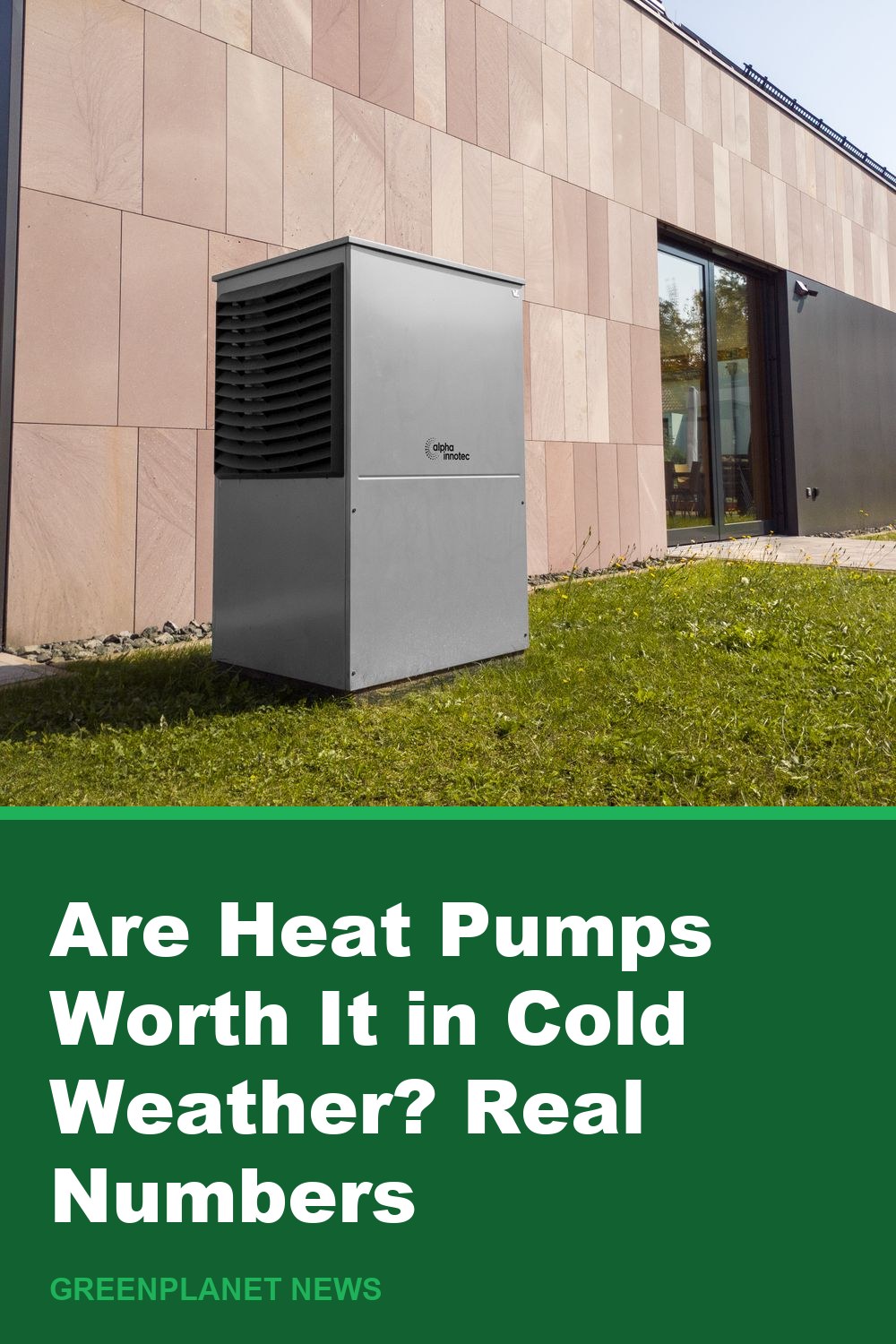

- In the South, a whole-home heat pump costs about $560 more than a standard AC and trims bills by about $250 a year, according to a new report.
- In New England, a $650 point-of-sale discount can stack with state rebates, which average $5,800 for a heat pump in Massachusetts.
- Federal tax credits for home efficiency upgrades have been repealed, so check state and utility rebates before you sign a quote.
For most households, yes: a heat pump is worth it in cold weather when it replaces expensive heat, and the biggest winners are homes on electric resistance heating, heating oil or propane. Two reports published in mid-November 2026 put numbers on this. One finds a payback of about three years in the South. The other describes a five-state push in New England, where heat pumps are being sold specifically as cold-climate systems. The catch is that your savings depend on what you heat with now, how your home is built, and whether rebates are available where you live.
A typical household in numbers: $560 extra, $250 a year back
Start with the cleanest example. Picture a home in the South with an old electric resistance furnace and a central air conditioner that is nearing the end of its life. Regulatory Assistance Project co-author Alex Antal describes such homes as heating with what is essentially an electric hair dryer. By his count, roughly 8 million households across 14 Southern states fit that description.
When that AC dies, the owner can buy a heat pump instead of another air conditioner. According to the report covered by Canary Media, a whole-home heat pump costs about $560 more than a traditional whole-home AC. Because heat pumps are about three times more efficient than electric resistance heating, the annual electricity bill drops by about $250. The report puts the payback at about three years. The analysis assumes the old electric furnace stays in place as a backup.
That last detail matters for anyone nervous about a deep freeze. You do not have to rip out your old heating to try this. The report keeps the furnace as a safety net, and you can ask your installer whether a similar arrangement makes sense for your house.
Three situations compared: cost, saving and payback
Not every home has a published payback figure. This table shows what the two reports actually give, and where the number is missing.
| Your situation | Upfront cost or help | Yearly saving | Payback |
|---|---|---|---|
| Southern home with electric resistance heat, replacing a worn-out AC | About $560 more than a standard AC | About $250 on electricity | About 3 years |
| New England home heated with oil | $650 discount on a space-heating heat pump in four of the five states, stackable with state rebates (average $5,800 in Massachusetts) | Substantial monthly savings for most oil customers | No figure published |
| Home heated with propane or natural gas | Same discounts where the program applies | A significant portion of propane and gas users save | No figure published; depends on your local prices |
The pattern is clear. The more expensive your current fuel, the stronger the case. Connecticut energy official Andy Frank called the switch "the closest thing we have to a magic trick in the energy industry", but the program data is more careful: savings are substantial for most oil customers and only a significant portion of gas and propane users. If you use gas, run your own numbers instead of assuming. The Honest Toolkit heat pump vs gas calculator is a quick way to do that with your own prices.
Why cold snaps favour heat pumps, and what the grid has to do with it
Winter Storm Elliott in December 2022 shows why this matters beyond your own bill. Temperatures stayed well below freezing for days, and about 1.6 million households in North Carolina and Tennessee lost power in rolling blackouts. Gas-fired power plants failed when their equipment froze, so it was widely treated as a supply problem.
The new report argues that cutting demand is the cheaper fix. According to the report, covered by Canary Media, heat pumps in the region would save as much power as 100 peaker plants. These are the costly units that only run when demand spikes. Building new plants to produce the same electricity would cost six to nine times more. Over 15 years, the report estimates cumulative savings of nearly $30 billion against a total investment of about $4.8 billion. Forest Bradley-Wright of the American Council for an Energy Efficient Economy noted that avoiding new plants "saves money for everyone."
For you, the practical point is that a more efficient heating system draws less power on the coldest, most expensive nights. That helps both your bill and the grid you share with your neighbours.
Who should buy now, and who should wait
Buy now if:
- Your AC or heating system is failing or close to it. The Southern report's savings are calculated for homes replacing an AC at the end of its life, when the extra cost is only about $560.
- You heat with electric resistance, oil or propane. These are the cases where the reports show the clearest bill cuts.
- You live in New England, where discounts and state rebates can be combined. Maine is the exception: it has put the accelerator money only into heat-pump water heaters.
Wait, or run the numbers first, if:
- Your current system works well and is not near replacement. Neither report makes the case for tearing out a healthy system early.
- You heat with natural gas. Only a significant portion of gas users save, so your result depends on local gas and electricity prices.
- You are counting on a federal tax credit. According to Canary Media, Congress has repealed the credits for home energy-efficiency improvements, so any help now has to come from state, utility or program rebates.
UK readers face a different grant picture. Our post on heat pump grant cuts and what UK homeowners should do now covers it.
Six steps before you sign a heat pump quote
- Write down what you pay now. Collect 12 months of bills for oil, propane, gas or electricity. Without that baseline, no saving claim can be checked.
- Ask for a cold-climate model. New England's program pays its incentive on cold-climate heat pumps, and it is a fair question to put to any installer in a freezing region.
- Ask about the backup. The Southern analysis keeps the old electric furnace as a backup. Ask your installer whether keeping your existing heat makes sense for your home.
- Look for point-of-sale discounts. In New England, the discount goes through distributors and reaches you as a lower price. Ask your contractor whether it is already in the quote.
- Stack the rebates. Check state and utility programs, since the New England discounts can be combined with them. Get the final figure in writing.
- Seal and measure first. Cutting drafts reduces the heat any system has to supply. Weatherstripping and door sweeps are cheap, and a digital room thermometer shows which rooms lose heat in a cold snap. Our guide to air sealing before you insulate covers the order of work.
If you are deciding between room-by-room units and whole-house ductwork, our mini-split vs ducted HVAC comparison helps you choose. The Honest Toolkit also has a printable heat pump checklist to bring to quote meetings.
What the numbers do not tell you
Neither report publishes how much a heat pump delivers at a specific outdoor temperature, so judge that with your installer's product data and your local weather. What the reports do show is that the economics work, especially for homes replacing expensive heat. New England states are betting $450 million in federal funds on the idea. The region's accelerator has reached more than 25,000 homes in its first year, against a goal of nearly 580,000 over four years. That is a long way from the target, but the program's backers say participation is far higher with the added incentives, and nearly 90% of the region's distributors have signed up. Get quotes, compare them with your 12 months of bills, and treat any rebate as the deciding factor only once it is confirmed in writing.
As an Amazon Associate I earn from qualifying purchases: if you buy through these links I may earn a small commission, at no extra cost to you. Each link opens a search on the Amazon store for your country.
Watch or listen to this episode
Sources
- Canary Media: In the South, heat pumps are the secret to a more reliable grid
- Canary Media: A year in, New England heat pump program is thriving
Photo: alpha innotec / Pexels

I'm an Italian creator who builds apps, games and websites. I run GreenPlanet News with the help of AI tools: every article starts from the sources linked above, and I check what goes out. I'm not a doctor, a lawyer or a financial adviser. Spotted a mistake or have an idea? Write to me.
Instagram @spartaco_94_My websiteWrite to meAbout this blog










 Green Investing 101: A Beginner's Guide to Sustainable Investments





