 GreenPlanet News

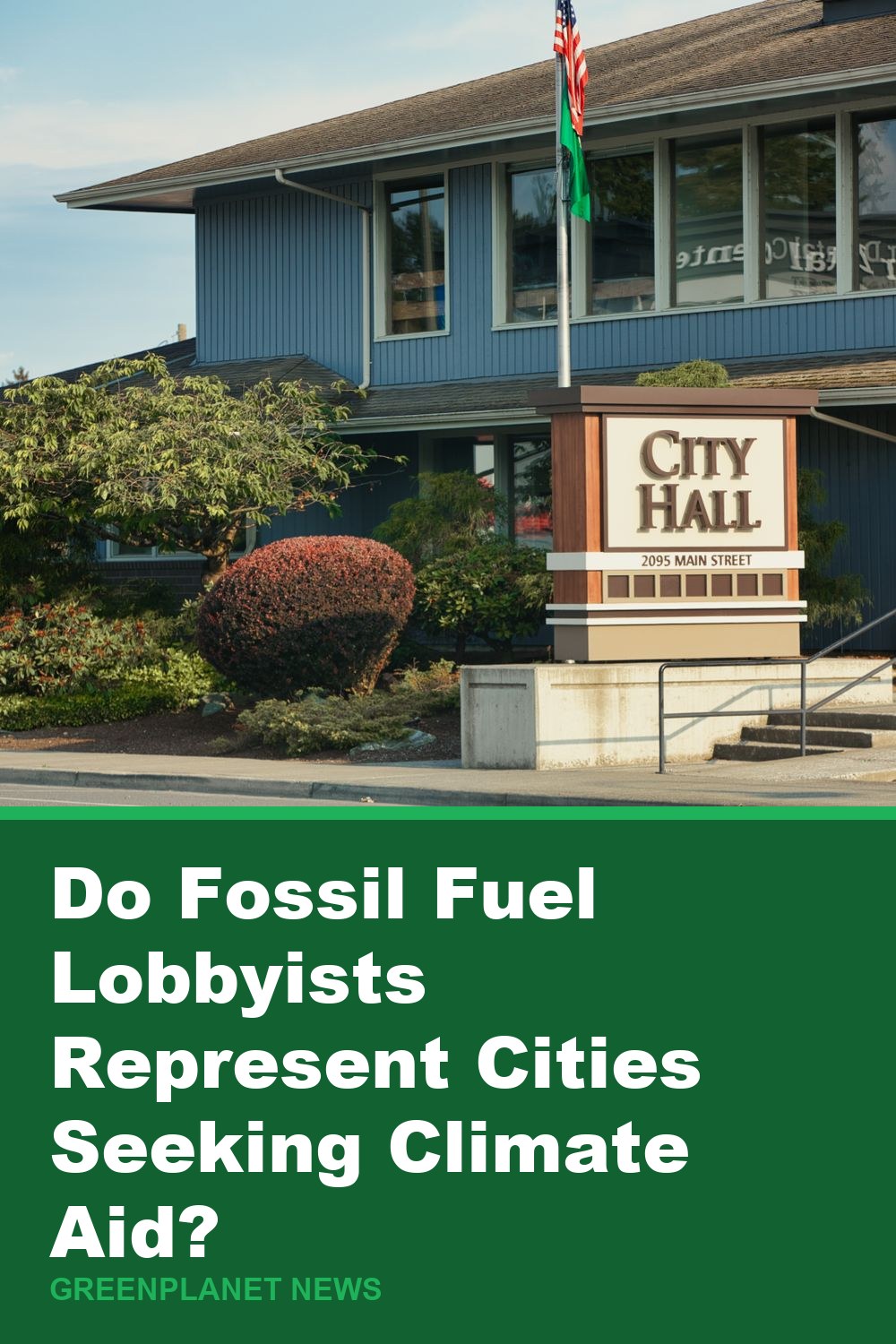

- An analysis by F Minus and Make Polluters Pay found overlap between fossil fuel lobbyists and those working for over 300 local governments in early 2026.
- The overlap comes from congressional lobbying disclosures, which you can ask your own city to explain: who it hires, and who else that lobbyist works for.
- Do not wait on disaster aid that may be slow or uncertain: flood-proofing and insulation at home cost little compared with a rebuild.
Yes, in many cases the same lobbyists do both jobs. An analysis by F Minus and Make Polluters Pay, based on congressional lobbying disclosures for the first quarter of 2026, found that lobbyists who represent the fossil fuel industry in Congress also advocate for more than 300 local governments seeking money to recover from climate-related disasters. That matters now because your town's request for rebuilding money may be carried by someone who is also paid to protect the industry whose emissions are making those disasters worse. Below I separate what the analysis shows from what it does not, then cover what you can check and do at home.
The claim people repeat
The version going around is blunt: “Oil and gas lobbyists are the ones asking Washington for your city's flood money.” It is a catchy line, and part of it holds up. The rest needs care, so I take it in two halves.
What is true: the same names appear on both lists
According to F Minus and Make Polluters Pay, the first quarter of 2026 showed a notable overlap between lobbyists working for fossil fuel firms and lobbyists working for local governments hit by climate change. Their method was to review congressional lobbying disclosures, the filings that say who is hired to lobby and for whom. Those filings link corporate interests to the public's need for climate resilience.
The scale is not small. More than 300 local governments are on the receiving end of this overlap, all of them looking for funding to rebuild and adapt after climate-related disasters such as wildfires and the effects of rising sea levels.
How one lobbyist can serve both clients
A lobbyist is hired by a client to press that client's case with lawmakers. Nothing in a disclosure form stops a lobbyist, or a firm, from holding several clients at once. So a city can hire someone for a disaster-aid request, and an energy company can hire the same person for its own priorities. Each client sees only its own contract. The overlap becomes visible only when someone reads the filings side by side, which is what this analysis did.
What is not: motives and outcomes are not proven
The analysis shows an overlap in who is representing whom. It does not, on its own, show that any particular lobbyist held back a city's request or watered down a climate bill. Be wary of anyone who says it does.
The concern raised is a possibility: the lobbyists pushing for cities' recovery money may also be positioning fossil fuel companies to block broad policy measures aimed at cutting carbon emissions. If that happened, the conflict would work like this:
- Funding for cleanup could move while prevention stalls. A city might win help rebuilding after a disaster while the policies that would reduce future disasters get blocked.
- Cities could end up arguing against their own interest. Local efforts at climate recovery could be undermined, even without anyone intending it.
- The public sees only the headline request. Residents hear “our city is asking for aid” and rarely hear who else the advocate works for.
Fossil fuel companies are major contributors to the greenhouse gas emissions driving climate change, and their lobbying often aims to keep their market position. That is the tension, and it is why the overlap draws attention. The analysis is also about US Congress, so UK readers should not assume the same pattern applies to local councils in Britain.
What it changes at home: a checklist you can use
You cannot rewrite federal lobbying rules from your kitchen table. You can, though, ask better questions locally and stop treating outside aid as your only plan.
Questions to put to your city or county
- Do we hire a lobbyist or lobbying firm? Ask which one, and what the contract covers.
- Who else does that lobbyist work for? Lobbying disclosures list clients, so a council clerk or a local reporter can help you check whether energy companies are among them.
- What are we asking for? Money to rebuild only, or also money for reducing risk and emissions?
- Is the work disclosed in public meetings? Press for more openness about affiliations and funding sources, at local and national level.
Steps for your own household
- Do not budget around aid arriving. Recovery money is requested through a long process and is not guaranteed. Cheap protection now costs far less than repairs later.
- Prepare for water. Our guide to preparing your home for El Niño flooding on the East Coast covers practical steps. A few leak or water-level alarms in a basement or crawl space are an inexpensive start.
- Show up locally. Back community efforts on sustainable solutions, and tell elected officials you want local needs put ahead of corporate interests. Public comment is one channel, and we have written about how public input on environmental rules is being narrowed.
- Back groups that watch both sides. Climate advocacy organizations that hold corporations and governments accountable are the ones most likely to read filings like these.
- Know what funding is at risk. Community programs rely on public money too; see our piece on federal cuts to environmental justice programs.
FAQ
Is it a conflict of interest if a lobbyist has fossil fuel and city clients?
It creates a tension. A lobbyist paid by an energy company has reason to resist strong emissions policy, while a city client wants recovery money for damage that emissions worsen. The analysis highlights the overlap; whether a given lobbyist let one client's interest affect another's is a separate question that disclosures alone do not answer.
How can I find out which lobbyists my city uses?
Start with your city or county clerk, who can tell you whether the local government hires outside lobbyists. Then compare that name against the client lists in congressional lobbying disclosures, the same kind of filings F Minus and Make Polluters Pay reviewed.
As an Amazon Associate I earn from qualifying purchases: if you buy through these links I may earn a small commission, at no extra cost to you. Each link opens a search on the Amazon store for your country.
Photo: Greg Thames / Pexels

I'm an Italian creator who builds apps, games and websites. I run GreenPlanet News with the help of AI tools: every article starts from the sources linked above, and I check what goes out. I'm not a doctor, a lawyer or a financial adviser. Spotted a mistake or have an idea? Write to me.
Instagram @spartaco_94_My websiteWrite to meAbout this blog










 Green Investing 101: A Beginner's Guide to Sustainable Investments





