 GreenPlanet News

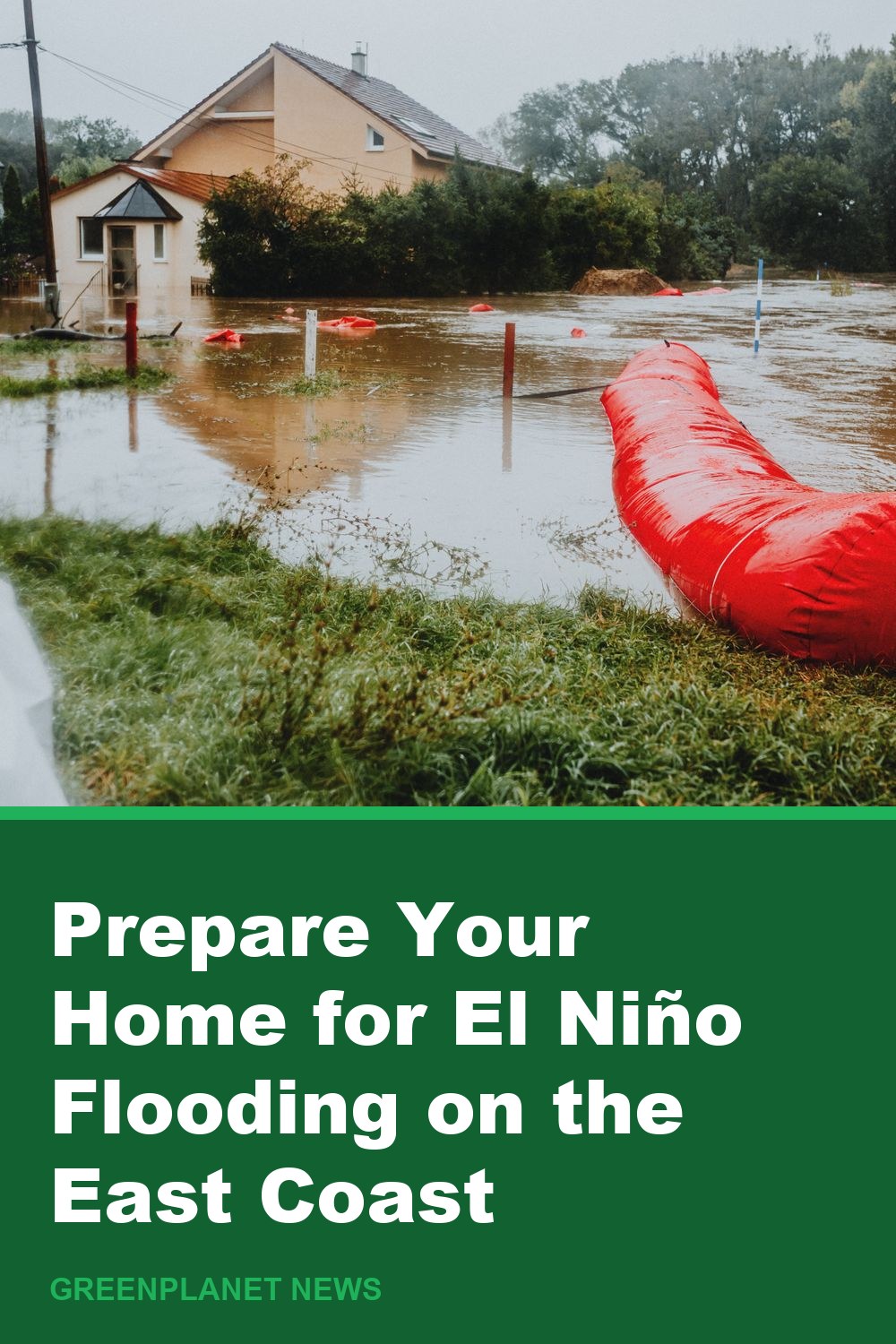

A very strong El Niño is now in place, and it tilts the odds toward a wetter winter across the South and up toward the mid-Atlantic. According to Yale Climate Connections, there could be many more local and regional flooding episodes between now and spring 2027. Coastal water levels are already at record highs in parts of Florida and California. If you live in the Southeast or along the Eastern Seaboard, an afternoon spent on gutters, drains, your sump pump and your paperwork costs far less than a flooded ground floor.
What the forecast says about your winter
El Niño's classic US pattern is a wetter-than-usual arc from southern California across the Southwest and South, reaching close to the mid-Atlantic. Parts of that arc have already been hit. Yale Climate Connections reports destructive flooding rain in Arizona, the Four Corners region, parts of Florida's Space Coast and northern Georgia over recent weeks.
The risk is higher if the El Niño-boosted jet stream sets up along the southern tier of the country, which NOAA's winter forecast implies. Historical and model evidence also points to a run of strong nor'easter-type storms, though it is unclear whether they will bring much snow along the I-95 corridor. There is also a heightened risk of a major late-winter tornado outbreak, especially in Florida.
Warm water adds fuel. University of Arizona analysis cited by Yale Climate Connections shows Gulf of Mexico sea surface temperatures near record warmth for early November. Over the subtropical North Atlantic east of Florida they were about 0.5°F (0.3°C) above the previous record. Emily Becker, a research associate professor at the University of Miami and former lead writer of NOAA's ENSO Blog, notes that warmer air holds more moisture, so global warming is likely to enhance El Niño's rainfall impacts.
Be realistic: likely, not certain
Not every town will flood. Pam Knox, extension climatologist at the University of Georgia, puts the likelihood of wetter and cooler conditions somewhere in the Southeast at about eight in ten. She adds that this does not necessarily mean stronger impacts, just more likely ones. Becker says the current event is roughly tied with 1997-98 for atmospheric response, so typical El Niño patterns are more probable, but it is harder to say whether the impacts will be more extreme.
Many places may get rain that is more generous than dangerous, which would be welcome after the drought. The US Drought Monitor shows the share of the lower 48 in some level of drought fell from a September peak of 59% to around 44% by November 3. Swaths of moderate to extreme drought remain across the South from Texas to North Carolina.
Treat this as a reason to prepare cheaply now, not to panic.
Why coastal homes need extra attention
Rain is only half the story. High tides are the other. Yale Climate Connections reports that record or near-record coastal water levels this autumn came from a mix of long-term warming, ocean expansion, persistent onshore winds and unusually large "king tides."
Miami is a stark example, according to figures compiled by Jeff Masters:
- Coastal waters reached the "Moderate" flooding threshold for a record 11 days in a row, ending November 1.
- Four of the highest water levels since the Virginia Key tide gauge was installed in 1994 came during the October 2026 king tides.
- Sea level there has risen about 1.12 feet since 1931.
- A flood that would have been a one-in-10-year event in 1931 has already happened on 24 days between September 25 and November 2.
If your street floods on high-tide days, heavy rain arriving on top of a king tide is the combination to plan for, because water has nowhere to drain.
What to do: a home flood-prep checklist
The forecasts do not tell you how to prepare, so here is a practical order of work. Start with the cheapest jobs and the ones that move water away from your house.
| Forecast signal | What it means at home | What to check |
|---|---|---|
| Wetter-than-usual arc from the South to the mid-Atlantic | Repeated heavy rain on roofs, yards and drains | Clear gutters and downspouts; make sure downspouts discharge well away from the foundation; clear yard and street drains |
| Strong nor'easter-type storms | Wind-driven rain and power cuts | Test your sump pump and consider a battery backup; check seals around windows and doors; charge power banks |
| King tides and record coastal water levels | Water rising from drains and low ground on clear days | Move valuables off the floor in garages and ground-floor rooms; note which streets flood first; plan a dry route out |
| Possible flooding between now and spring 2027 | The risk runs for months, not days | Review flood insurance now; photograph your belongings; keep documents in a waterproof bag or in the cloud |
| Late-winter tornado risk, especially Florida | Separate hazard, same season | Know your shelter spot and keep a go-bag by it |
Gutters, drains and the sump pump
Start at the roof. Clear leaves and debris from gutters, then run a hose and watch that water flows freely to the downspout and away from the house. Splash blocks or extensions should carry it clear of the foundation. Walk the property in the next rain and note where water pools.
If you have a sump pump, lift the float and confirm it starts and discharges outside. Check that the discharge pipe is not blocked or frozen. A pump is useless in a power cut unless it has a backup, so ask a plumber about battery options if your basement or crawlspace has flooded before.
Fixing drainage also fits a green-living routine. Rain barrels and rain gardens can slow runoff from your roof, though they will not stop a major flood.
Review your flood insurance
Read your policy this week and look for the word "flood." Many home policies treat flood damage separately from other water damage, so ask your insurer or agent directly what is and is not covered. If you want to add cover, ask when it would start. A new policy may not take effect immediately, and a storm forecast is a poor time to find that out.
Ask, too, what your deductible is, whether your belongings and any detached garage are covered, and what proof of loss you would need. A short video walk-through of each room, stored online, makes a claim much easier.
Build an emergency cushion
Flood recovery often starts with costs you pay before any insurance payout arrives: a hotel, a pump-out, a replacement fridge. Work out your deductible and use it as your first savings target. Put the money in an easy-access account, not in an investment you would have to sell at a bad moment. Even a small automatic transfer each payday builds the habit before spring.
Keep some cash at home too. Power cuts can stop card readers and cash machines.
FAQ
Will El Niño definitely cause flooding where I live?
No. El Niño shifts the odds rather than guaranteeing outcomes. Pam Knox of the University of Georgia says wetter and cooler conditions somewhere in the Southeast are about eight in ten likely, but that does not mean stronger impacts. Some areas may stay on the dry side. Preparing is sensible because the risk is raised, particularly on the coast, where king tides add to the problem.
Does homeowners insurance cover flood damage?
Many policies treat flood separately from other water damage, so do not assume yours does. Ask your insurer or agent whether flood is covered, what the deductible is, and whether there is a waiting period before new cover begins. Do it now, ahead of the winter storms.
How often should I check gutters and the sump pump during a wet winter?
Check them before the season starts, then again after any big storm or windy spell that drops leaves and debris. Test the sump pump by pouring water into the pit so you know it switches on and discharges properly. Keep a quick look at downspouts and drains as part of your routine whenever heavy rain is forecast.
- Battery backup for a sump pump
- Water leak alarm sensors for basements and garages
- Gutter cleaning tool you can use from the ground
As an Amazon Associate I earn from qualifying purchases. Links open a search on the Amazon store for your country.
Watch or listen to this episode
Sources
- Yale Climate Connections: What to watch for – and prep for – across the Southeast U.S. and Eastern Seaboard as El Niño peaks
- Yale Climate Connections: Heat and high water: Floods pockmarked southern U.S. states during one of the hottest Octobers on record
Photo: Helena Jankovičová Kováčová / Pexels

I'm an Italian creator who builds apps, games and websites. I run GreenPlanet News with the help of AI tools: every article starts from the sources linked above, and I check what goes out. I'm not a doctor, a lawyer or a financial adviser. Spotted a mistake or have an idea? Write to me.
Instagram @spartaco_94_My websiteWrite to meAbout this blog










 Green Investing 101: A Beginner's Guide to Sustainable Investments





