 GreenPlanet News


- Swap personal care, food containers and cleaners one at a time, as each runs out, rather than clearing out the house in a weekend.
- Glass or stainless steel for food and drink, plus vinegar or baking soda for cleaning, covers two big sources of exposure cheaply.
- Fresh air dilutes airborne chemicals, so open windows and use extractor fans, especially when you clean.
The simplest way to reduce everyday chemical exposure at home is to change five habits: choose gentler personal care products, use glass or stainless steel instead of plastic for food and drink, cut back on harsh cleaners, ventilate more, and read labels before you buy. None of it needs special equipment or a big budget. It matters because, according to Brad Reisfeld, a toxicologist at Colorado State University, small exposures from ordinary products can add up over time.
Why small daily exposures add up
Reisfeld describes a typical weekday. You wash your hair with shampoo, put on deodorant and drink coffee from a plastic cup. At work, the cleaning products add more chemicals to the air and surfaces around you. Each step looks harmless on its own. Together, they build a steady background load that most of us never think about.
Many synthetic chemicals in consumer products have been linked to health problems, from hormonal disruption to a higher risk of cancer. That does not make every chemical a villain. Plenty are safe and some are useful. Reisfeld's point is not to remove every product from your life. It is to be more discerning about what you buy and use. That is a sensible, thrifty approach: you change what is easy to change and ignore the rest.
What you need before you start
You probably own most of this already. Gather it first so each swap takes minutes rather than a shopping trip.
- A pen and paper, or your phone, to list the products you use every day.
- Your current shampoo, deodorant and cleaning products, so you can read their labels.
- Glass or stainless steel food containers and a stainless steel or glass drinks bottle or mug.
- White vinegar and baking soda for basic cleaning.
- A barcode-scanning app for ingredient and safety ratings, if you like gadgets. Online ingredient searches work too.
Five steps to lower your chemical exposure at home
- List what you use daily. Write down every product that touches your skin, hair or food, or that you spray or wipe around the home. Start with the ones you use most often, because those add the most exposure over time. Your own list is the best guide to where a swap will help.
- Swap personal care products as they run out. Reisfeld's advice is to choose natural or organic shampoo, deodorant and similar items to limit exposure to the chemicals in conventional versions. Do not bin half-full bottles. Replace each product when it is finished, and the cost spreads across your normal shopping.
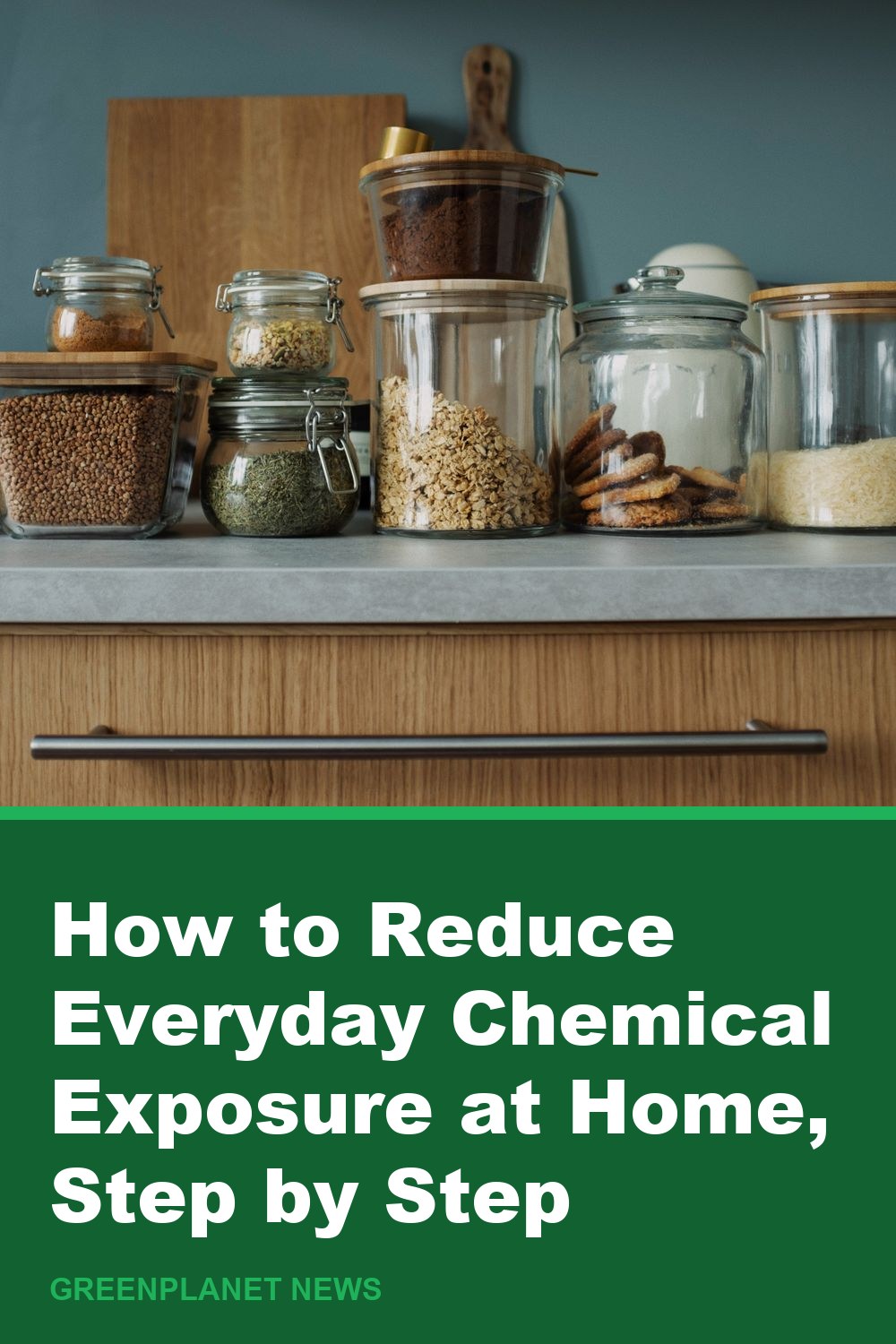
- Move food and drink into glass or stainless steel. Start with what you handle every day: the coffee cup, the water bottle and the lunch box. Reisfeld specifically recommends glass or stainless steel over plastic for food and beverages. A reusable travel mug also replaces the plastic cup in the weekday picture above. Our post on the shift to PFAS-free food containers in Chicago looks at takeout packaging if you eat out often.
- Use gentler cleaning products. Cut back on harsh cleaners and try vinegar or baking soda, which Reisfeld points to as effective, non-toxic alternatives. Use one product at a time and avoid mixing cleaners, so you do not create new fumes. Keep a stronger product for the rare job that truly needs it.
- Ventilate and read labels. Open windows and run extractor fans, especially while you clean or at work, so chemical concentrations in the air stay lower. When you buy something new, read the label and look up brands that are open about safety and sustainability. Our guide to stopping condensation on windows covers how to move air around without leaving the house damp.
Airing out a room does let heat escape in winter. To keep that cost down, ventilate in short, deliberate bursts rather than leaving windows ajar all day. The Honest Toolkit energy-efficiency guide is a useful companion if you want to keep fresh air and your heating bill in balance.
Common mistakes that waste money or effort
- Trying to remove everything at once. Reisfeld is clear that the goal is to be more discerning, not to eliminate every product. A big clear-out is expensive and rarely lasts.
- Assuming all chemicals are bad. Many are safe and some are beneficial. Focus on the synthetic chemicals linked to health risks rather than fearing every ingredient on a label.
- Trusting a front-of-pack word alone. "Natural" on the front is a starting point. Read the ingredients and look into the brand itself.
- Swapping the container but not the habit. A glass jar you rarely use changes nothing. Put the new containers where you reach for them every day.
- Cleaning in a closed room. Even a gentle cleaning routine is better with a window open.
- Mixing cleaners. Combining products can make things worse, so use one at a time.
When to ask an expert for help
Everything above is routine household housekeeping and needs no specialist. Bring in outside help when the question is bigger than a product swap. If a product label carries a safety warning you do not understand, check the manufacturer's information or contact the maker before you use it. If you have a health concern you think may be linked to something at home, speak to your doctor or pharmacist. For work, raise cleaning-product questions with your employer or the person responsible for workplace safety, because you cannot control the products used there yourself. For a persistent smell or air-quality problem in your home, a qualified professional can look at the cause. Resources from organisations that focus on chemical safety are also a good place to learn more.
A realistic weekly routine
Keep it light. In week one, write your list and switch your daily drink to a stainless steel or glass option. In week two, read the labels on your personal care products and note what to replace next. In week three, try vinegar or baking soda for one routine cleaning job and open a window while you do it. In week four, make ventilation a habit, then check what else on your list is nearly empty. After a month you have changed the products you touch most, and it has cost you little more than normal shopping.
For the food side of the picture, see our post on hidden toxic chemicals in everyday food.
FAQ
Do I have to throw away my current products?
No. Finish what you have, then replace each item with a gentler option as it runs out. This avoids waste and spreads the cost. Start with the products you use most often, since they add up fastest.
Is it realistic to remove chemicals from my home completely?
Not entirely, and you do not need to. Informed choices about what you buy and use can still cut your exposure and be better for the environment.
As an Amazon Associate I earn from qualifying purchases: if you buy through these links I may earn a small commission, at no extra cost to you. Each link opens a search on the Amazon store for your country.
Sources
Photo: ready made / Pexels

I'm an Italian creator who builds apps, games and websites. I run GreenPlanet News with the help of AI tools: every article starts from the sources linked above, and I check what goes out. I'm not a doctor, a lawyer or a financial adviser. Spotted a mistake or have an idea? Write to me.
Instagram @spartaco_94_My websiteWrite to meAbout this blog










 Green Investing 101: A Beginner's Guide to Sustainable Investments





