 GreenPlanet News

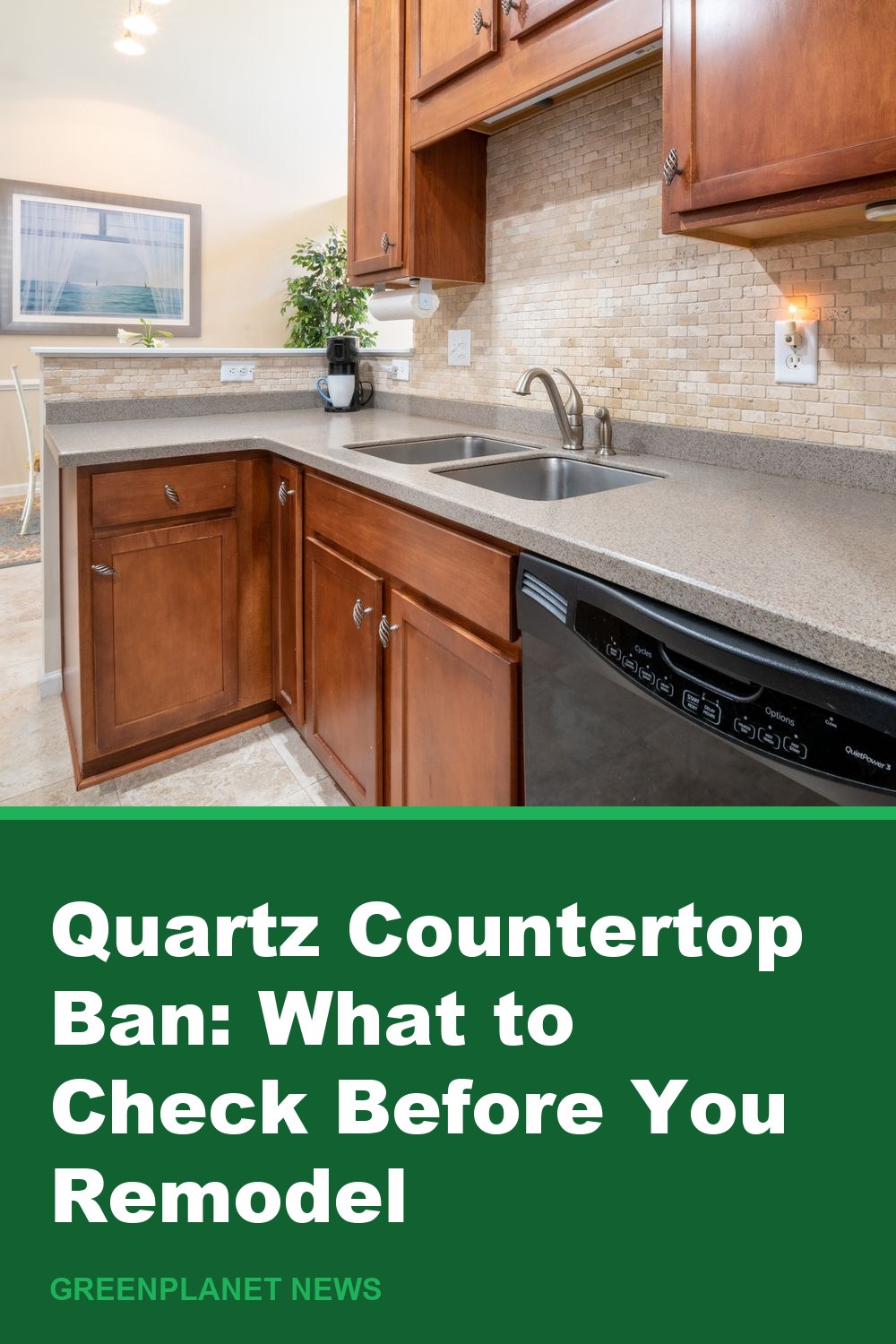

If a new kitchen or bathroom is on your list, the countertop you pick may soon be a bigger decision than colour and price. California is considering the first US ban on fabricating engineered quartz, and possibly other stone-slab materials, after a surge in silicosis among the workers who cut and polish them. Even if you live elsewhere, the story affects what fabricators offer, what questions you should ask, and how you weigh long-term value against a trendy finish.
What California is proposing
According to Green Building Advisor (GBA), the proposal is moving through Cal/OSHA, California's Division of Occupational Safety and Health. It targets the fabrication of engineered quartz, meaning the cutting and shaping of slabs, and it may reach other stone-slab materials too.
The driver is a rise in silicosis, a lung disease caused by inhaling fine dust. GBA reports that since 2019, 35 workers in the state have died, 58 have had lung transplants, and more than 600 others have fallen ill from dust created during fabrication. About 98% of those affected are Latino men, with a median age in the mid-40s.
GBA notes that cutting and polishing engineered quartz releases microscopic crystalline silica dust. That is the hazard behind the proposal, and it is a hazard for the people in the workshop rather than for someone wiping down a finished counter.
How far the rule could reach
The scope grew along the way. After an emotional hearing in May, the Cal/OSHA board voted 3-0 in favour of a ban. A draft appeared in September. In October the board edited the wording so that it covers more than kitchen counters: bathrooms, fireplaces and flooring are named. It would also cover any alteration that removes material from the slab beyond what a minor fit adjustment needs.
That last point matters for remodelers. Most kitchens need cutouts for sinks and hobs, and many layouts need custom sizing. A rule written around fabrication, rather than around the finished product, could affect how and where slabs are prepared for your room. GBA says the rule could be enacted as early as November, though the timing was not certain.
It is not only California
GBA says a California ban would be the first in the US, but other places have already acted. Australia has banned engineered quartz containing more than 1% crystalline silica. The UK issued strict guidelines that took effect earlier this year. New York City and Massachusetts have put out health warnings about working with engineered stone.
For UK readers, that means the guidance already applies to the trades you may hire. For US readers outside California, it suggests the conversation is spreading, so it is sensible to ask questions now rather than after your quote is signed.
Opinion in the industry is split. Eric Goranson, a Certified Kitchen Designer and host of the Around the House Show, told GBA that many contractors disagree with the ban. He added that many homeowners have seen only a few news stories, so they are not well informed about the material or how it is produced.
Timeline at a glance
| When | What happened | What it means for your remodel |
|---|---|---|
| Since 2019 | 35 deaths, 58 lung transplants and 600+ illnesses among fabrication workers in California | The health case is about workshop dust, so how a slab is cut matters as much as what it is made of |
| May | Emotional hearing; Cal/OSHA board votes 3-0 in favour of a ban | The idea has formal backing, not just campaigner support |
| September | Draft proposal released | Wording was still open to change |
| October | Edits extend scope to bathrooms, fireplaces and flooring, and to cutting beyond minor fit adjustments | Vanities, fireplace surrounds and floors could be affected, not only kitchen counters |
| As early as November | Possible enactment | Californians planning a remodel should check the current status before ordering |
What to do if you are planning a remodel
You do not need to panic, and you do not need to rip out a quartz counter you already own. The proposal concerns fabrication, not the surface sitting in your kitchen. But if you are choosing materials now, a few steps will protect your budget and the people who work on your home.
- Check local rules before you order. In California, ask your contractor or fabricator what the current status of the Cal/OSHA rule is. Elsewhere, ask whether any local or national guidance affects the shop you are using.
- Ask for the silica content. Australia's threshold of more than 1% crystalline silica shows regulators care about this figure. A good supplier should be able to tell you what is in the slab.
- Do not assume natural stone is exempt. GBA says the ban may reach other stone-slab materials, so ask any fabricator how they limit dust whatever material you choose.
- Ask where the cutting happens. Cutouts and edge work done in a controlled workshop are different from improvised cutting on a driveway. Ask who does the work, and how they control dust.
- Get the full quote in writing. Include templating, cutouts, and what happens if rules change before installation. A ban or a stricter guideline could affect lead times or costs.
- Compare options on lifespan, not just look. Ask for warranty terms, repair options and care requirements for each material you are considering. A surface that lasts decades with simple maintenance is usually the greener and cheaper choice over time.
Saving money and waste while you decide
The greenest countertop is often the one already in your home. If your current surface is sound and you mainly dislike the colour or edge, ask whether keeping it, or changing only the cabinet fronts and hardware, would meet your goals. That avoids new slab production, delivery and demolition waste, and it avoids work that creates dust.
If you do need a new surface, get quotes for at least two different materials and compare the total installed price, including cutouts. Ask each fabricator the same questions from the checklist above. How clearly and willingly they answer is useful information in itself.
Finally, remember the people behind the product. The proposal exists because workers became seriously ill making kitchen and bath surfaces. Choosing a supplier who takes dust control seriously is a practical way to put your money behind safer work.
FAQ
Is California's engineered quartz ban in force yet?
According to Green Building Advisor, the Cal/OSHA board voted 3-0 in favour of a ban, a draft was released in September, and edits followed in October. Enactment was possible as early as November. Check with Cal/OSHA or your contractor for the current status before you order.
Do I have to remove quartz countertops I already have?
Nothing in the proposal as reported by GBA requires homeowners to remove existing surfaces. The ban is aimed at fabrication, meaning cutting and shaping slabs, where workers breathe in crystalline silica dust.
Are there rules on engineered stone outside California?
Yes, in several places. Australia has banned engineered quartz with more than 1% crystalline silica. The UK issued strict guidelines that took effect earlier this year, and New York City and Massachusetts have issued health warnings about working with engineered stone.
Sources
Photo: Curtis Adams / Pexels

I'm an Italian creator who builds apps, games and websites. I run GreenPlanet News with the help of AI tools: every article starts from the sources linked above, and I check what goes out. I'm not a doctor, a lawyer or a financial adviser. Spotted a mistake or have an idea? Write to me.
Instagram @spartaco_94_My websiteWrite to meAbout this blog










 Green Investing 101: A Beginner's Guide to Sustainable Investments





