 GreenPlanet News

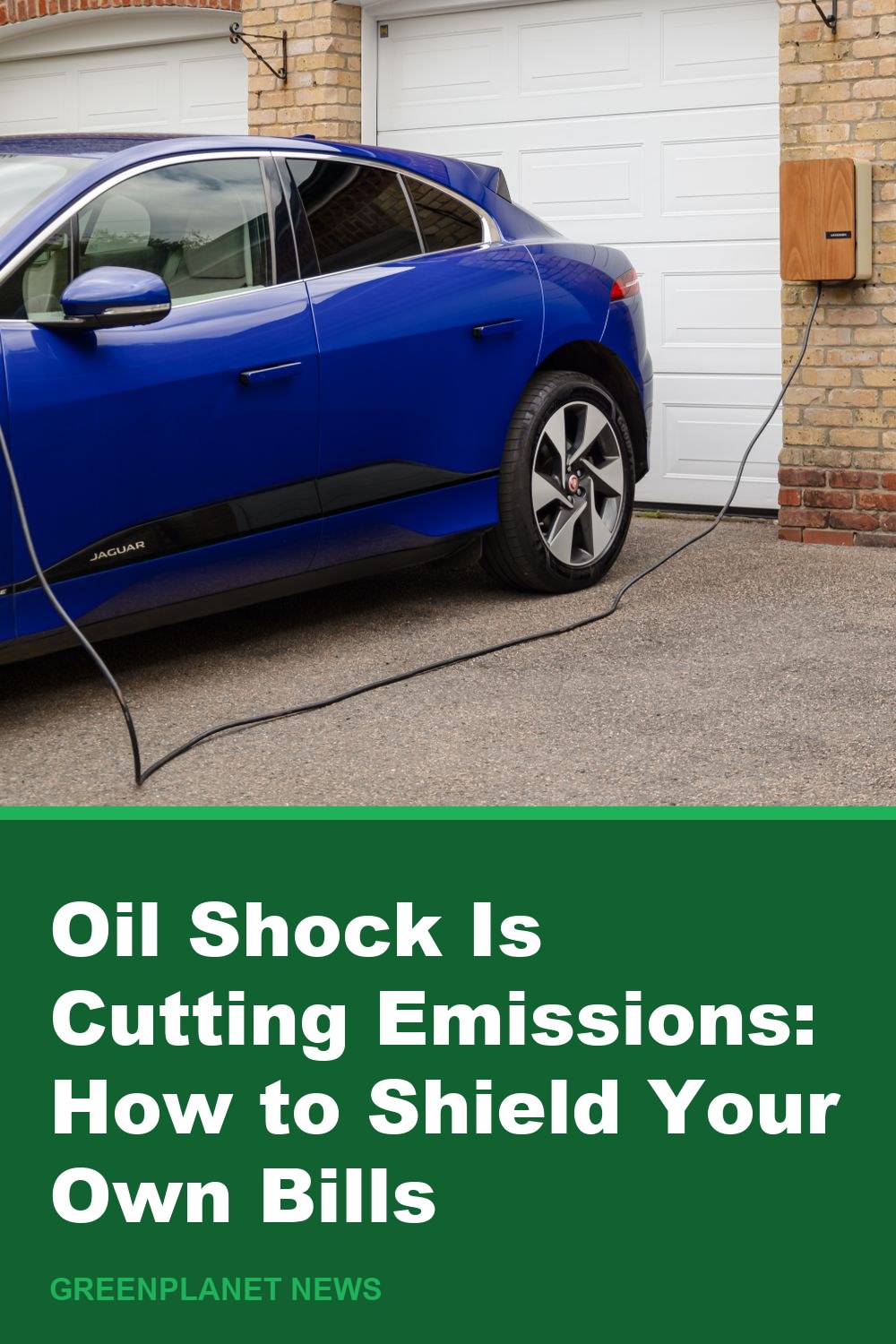

Global carbon dioxide emissions from fossil fuels and cement are projected to fall by about 0.4% in 2026, to 38.2 billion tonnes, according to the Global Carbon Project. Much of the dip comes from a 1.9% drop in oil emissions after the energy shock linked to the Iran conflict and the closure of the Strait of Hormuz. For households, the lesson is that high fuel prices are changing behaviour right now. The researchers also warn the dip may not last, so the surest protection for your pump and heating bills is to use less fuel and rely less on it.
What the new figures show
The 2026 Global Carbon Budget is the 21st annual edition of the report. Carbon Brief's analysis says oil emissions are projected to fall in every major region. Coal emissions, meanwhile, are still creeping up slightly.
The Guardian reports that soaring oil and gas prices have encouraged people to look beyond fossil fuels, with drivers economising on fuel and moving to electric vehicles. Research published alongside the report in Nature Climate Change finds that solar, wind and EVs now offset around two-thirds of the emissions that would otherwise come from rising energy demand.
Why the dip may be temporary
The authors are cautious. Professor Pierre Friedlingstein of the University of Exeter, who led the research, said a reduction driven partly by geopolitical shocks is not a sustainable climate solution. Glen Peters of the CICERO Center for International Climate Research put it more bluntly: a one-year drop is not a peak unless it is driven by structural change.
The Guardian lists several things that could undo the trend, including an easing of oil prices, more coal in India and political enthusiasm for fossil fuels in the US. Bill Hare of Climate Analytics called the picture a flatline rather than a decline, noting that a 0.4% fall is statistically indistinguishable from zero.
Total CO2 emissions, which include deforestation and land use, are still forecast to reach a record 43.3 billion tonnes in 2026, up from 42.8 billion in 2025. A rise in peat fires and forest degradation in south-east Asia, linked to El Niño, drives that increase.
For a household, the same logic applies to your bills. A price spike that nudges you to use less fuel is useful, but if prices ease and nothing structural has changed, you are as exposed as before.
A preview from China: drivers switch when fuel gets dear
Yale Environment 360, drawing on Carbon Brief's analysis, reports that China's oil use fell 4% year on year between July and September as drivers moved to electric cars while the war pushed up fuel costs. Electric cars made up two in three new passenger vehicles sold there in September, according to industry data. China's CO2 emissions fell 3.1% in the same quarter, its steepest quarterly drop since the 2022 lockdowns.
That is a national picture, not a recipe for your household. It does show what happens when a fuel price shock meets an affordable alternative: people switch, and the switch tends to stick.
| Region | Projected change in fossil CO2, 2026 | What stands out |
|---|---|---|
| China | -0.9% | Largest oil drop of any major region (-4.6%) |
| United States | -1.3% | Guardian: driven by less coal use |
| European Union | -1.5% | Biggest fall of the four |
| India | +4.4% | Growth driven mostly by coal; oil use down slightly |
Figures are from Carbon Brief's analysis of the Global Carbon Budget, with detail on the US and India from the Guardian.
What this means for you: a practical plan
You cannot control the oil market. You can control how much of it your home and car depend on. Here is an order of play that starts cheap and builds up.
- Find your exposure. Gather 12 months of heating bills and fuel receipts. Add them up. The larger of the two is where upgrades will pay back most.
- Fix the leaks first. Draught-proofing, loft or attic insulation, and better heating controls reduce the energy you need whatever your heating system. They also make any later heat pump easier to run, because a well-sealed home needs less heat.
- Plan your heating replacement before the boiler fails. A heat pump moves heat using electricity instead of burning oil or gas in your home. Get quotes while your current system still works, and check which grants, tax credits or loan schemes are open in your area, because these vary by country and change over time.
- Make your next car a plug-in. The Guardian says drivers have been flocking to EVs as fuel prices rose. If you do most of your driving locally and can charge at home, a used or new EV takes you off the pump-price rollercoaster. If an EV is out of reach, a more efficient petrol or hybrid car is a step down in exposure.
- Cut what you burn today. Combine errands, keep tyres properly inflated, lower the thermostat a degree or two and bleed radiators. None of this needs capital, and all of it works the same whether oil is cheap or dear.
- Check your electricity deal. If you are moving to a heat pump or EV, your bills will depend more on your electricity tariff. Look at off-peak or time-of-use options, and consider rooftop solar if your roof suits it.
The bigger picture: why individual choices still matter
Professor Corinne Le Quéré of the University of East Anglia says clean technologies are making a real difference and that further acceleration could turn the tide on global emissions within a few years. That acceleration is made of ordinary decisions: a heat pump here, an EV there. The remaining carbon budget to keep warming to 1.5C is 150 billion tonnes of CO2, which is less than four years at current emissions, so there is little room for waiting on prices to decide for us.
It is also worth knowing where you sit. Carbon Brief reports 2025 per-person emissions of 14.5 tonnes in the US, compared with 2.2 tonnes in India and a projected global average of about 4.6 tonnes in 2026. For US households especially, home energy and driving are where the biggest personal cuts are available.
FAQ
Will petrol and heating prices stay high?
Nobody can promise either way. The Guardian lists an easing of oil prices as one of the factors that could reverse the 2026 dip in emissions. Planning for both outcomes is the safest course: efficiency upgrades pay off if prices stay high and still help if they fall.
Is an EV still worth considering if oil gets cheaper again?
The case for an EV does not rest on one price spike. Researchers say the long-term answer is rapid deployment of clean technologies including EVs, and solar, wind and EVs already meet about two-thirds of the growth in energy demand worldwide. Compare the total cost of ownership, including your home charging options, rather than the pump price on any given week.
Does a heat pump protect me from oil and gas price shocks?
It replaces fuel burned at home with electricity, so your heating bill no longer follows oil or heating-fuel prices directly. It then depends on your electricity tariff, so check how your supplier prices power, and insulate first so the heat pump has less to do.
- Plug-in energy monitor to see which appliances use the most power
- Draught-proofing kit for doors and windows
- Digital tyre pressure gauge for better fuel economy
As an Amazon Associate I earn from qualifying purchases. Links open a search on the Amazon store for your country.
Watch or listen to this episode
Sources
- Carbon Brief: Analysis: Fossil-fuel CO2 emissions set to dip in 2026 as Iran conflict hits oil use
- ScienceDaily – Sustainability: Global fossil fuel emissions set to fall in 2026, but total CO2 keeps rising
- The Guardian – Environment: Slight fall in carbon emissions from fossil fuels as Iran war drives renewables push
- Yale Environment 360: As War Roils Energy Markets, China Sees Its Emissions Drop
Photo: Khunkorn Laowisit / Pexels

I'm an Italian creator who builds apps, games and websites. I run GreenPlanet News with the help of AI tools: every article starts from the sources linked above, and I check what goes out. I'm not a doctor, a lawyer or a financial adviser. Spotted a mistake or have an idea? Write to me.
Instagram @spartaco_94_My websiteWrite to meAbout this blog










 Green Investing 101: A Beginner's Guide to Sustainable Investments





